This is part of my webcomic Postcards in Braille, which you can read on ComicFury or Tapastic. Updates on Mondays!
This comic/guide works well enough on its own, so I thought it’d be nice to post it here as well 😀 Braille is really cool and you don’t need to be blind or visually impaired to learn it – and spreading the use of Braille can help us build a more inclusive society! everyone wins!
Bonus fun fact: Braille is originally based on Night writing (or sonography), a tactile reading/writing system created for soldiers to communicate silently at night. Louis Braille adapted it into easier to read cells, creating the Braille system. Good to know it evolved into something so useful!
Write Rhymes finds rhymes for your words while you write and takes the weirdness out of poetry and scheming.
Coooool!
I DON’T THINK YOU UNDERSTAND JUST HOW AMAZING THIS IS FOR WRITERS LIKE WE SPEND YEARS FILLING NOTEBOOKS WITH RHYMES FOR WORDS AND PHRASES AND END-RHYMES AND SLANT RHYMES AND THEN ONE DAY SOME
FUCKING
GENIUS
GOES
“YOU KNOW WHAT’D BE COOL? MAKING EVERY POET WET THEMSELVES WITH FUCKING JOY”
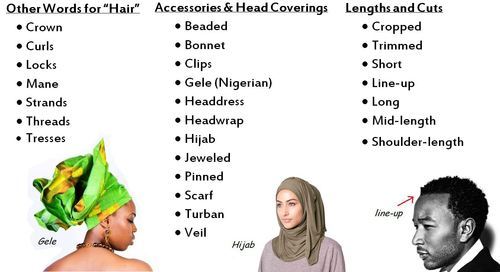
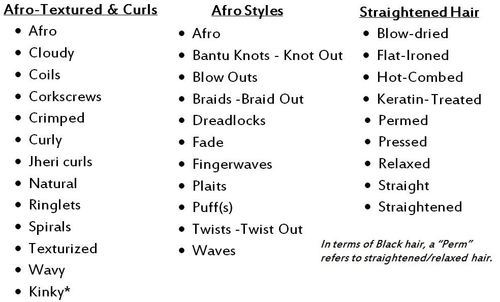
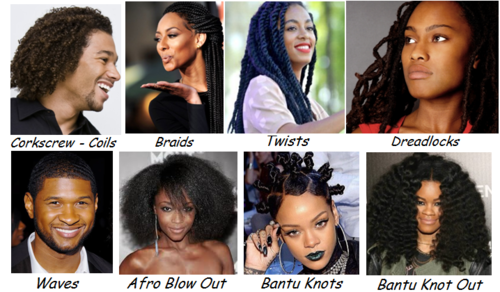
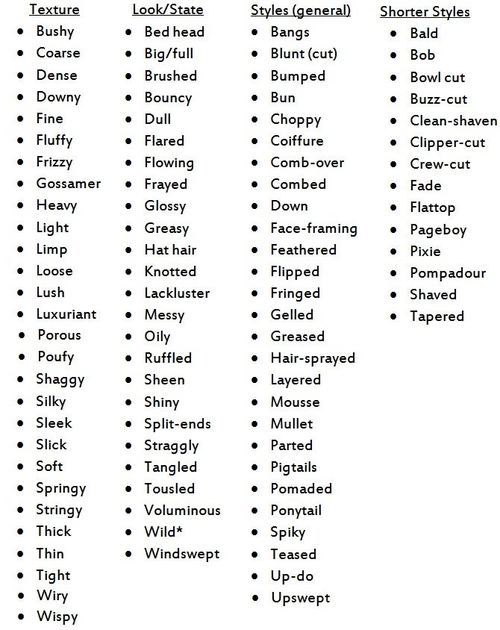
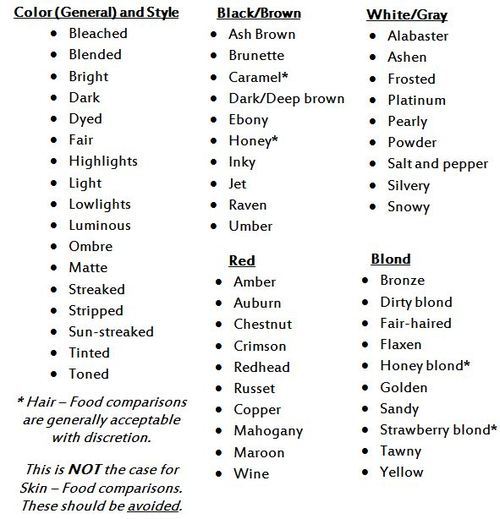
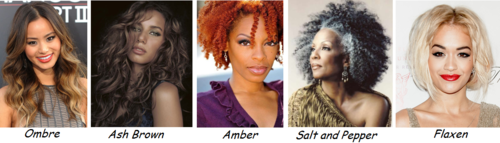
This began as a guide to describing Afro/curly hair but of course, I got carried away. From look and texture of hair, colors and various styles, this guide serves as a thesaurus of sorts for hair, as well as pointers for use in your writing.
In one of my fiction-writing classes, we had a workshop where we critiqued each other’s writing. There was one student that had a story about a poor boy, who had to work to help his family. At one point, the writer describes his room, and it sounds pretty standard: “vintage posters of rock musicians on the wall, an old board game his family had kept for years, battered Nike sneakers under the bed”. Our teacher said, “Your main character’s pretty selfish.” We all stared at her. “I mean, his family barely has enough to eat, and he’s spending money on buying expensive vintage band posters and Nike shoes?” I was shocked. I hadn’t thought anything of that description – it was just to paint a vivid picture, right? And I didn’t know vintage posters were expensive. What if the Nike shoes had been given to him as a gift? What if the mother had bought them? But it was the moment I realized that great writers put a lot of thought into all those seemingly useless details they leave in there, and they’re all clues leading to a larger truth. It’s not good enough to paint a vivid picture and put in details. Those details will be read into, and they need to point to the truth of your story or your character. That student certainly didn’t mean to make their character come across as selfish. And yet that was the conclusion that the details led to.
At the same time, sometimes the curtains are just blue, so to speak, and it doesn’t mean anything. Which is why consistency is also important. I wouldn’t have necessarily surmised that the character in the original post was clumsy just cause he tripped once – so establish this trait, remember that you made him clumsy, make him drop crumbs all over their lap and almost drop things that are handed to him. Otherwise I will assume his clumsiness is a one-time thing. It’s your job as a writer to include meaningful details, just as it is to establish when something is just a coincidence, or a plot device.
This is good. I bolded the part I felt was most important; good writers include details and keep things consistent, but I agree that great writers include those details for a reason and make them actually mean something (versus allowing them to simply be decoration).
The commentary’s better than the original post.
When I was a young writer, I thought details were there for the sake of being details. You enter a room, you describe the room so the reader can see it in their head, the end.
But in fact, nothing is supposed to be so pointless as to simply check off a box next to “Imagery” in an English class workbook. These details are meant to give the reader something meaningful about the impression it makes on the perspective character, or what’s up with this world and its people.
As for the original post… I think either could work depending on context. If you were trying to have that awkward kid really own this story, making it a story about her perspective rather than a series of events we the readers are watching, you’d go with the left, because it captures a sense of the kid’s understanding of the world rather than appealing to ours.
It’s also worth noting that the right example is very zoomed in, and forces you to go into the details of this particular event and follow it to a reasonable stopping point, which may or may not be desirable.
Ok here is a compilation of all the software and useful tools I’ve come across whilst writing. Some of them I’ve reviewed on here already, more coming soon.
Got an idea? Well get planning! Here’s some useful outlining, brainstorming and mind- mapping software:
This began as a guide to describing Afro/curly hair but of course, I got carried away. From look and texture of hair, colors and various styles, this guide serves as a thesaurus of sorts for hair, as well as pointers for use in your writing.
Culturally Significant Hair Coverings:
Know the meaning behind head wear and why it’s worn, when and by whom, such as a Native Nation’s headdress, before bestowing a character with it.
Appropriative Hairstyles: Keep in mind that Afro styles should be kept to those in the African Diaspora, such as dreadlocks, cornrows + certain and many braided styles.
Tread carefully describing Afro hair as “wild” “unkempt” “untamed” or any words implying it’s unclean or requires controlling.
“Nappy” and “wooly” are generally words to stay away from, the first having heavy negative connotations for many and the latter, though used in the Holy Bible, is generally not acceptable anymore and comes off as dehumanizing due to Animal connotations.
There are mixed feelings on calling Black hair “kinky.” I’m personally not opposed to the word initself and usage depends on the person’s race (I’m more comfortable with a Black person using it vs. a Non-Black person) as well as their tone and context (if it’s used in a neutral or positive tone vs. negatively/with disdain). Get feedback on your usage, or simply forgo it.
Combination Words: Try combing words to illustrate look of hair. A character with springy coils that dance across her shoulders with every movement, the man with thick silvery hair slicked back into a ponytail…
Mind Perspective: Depending on POV, a character might not know exactly what cornrows or a coiffure style is, at least in name, and it might make more sense if they described the hairdo instead. More defining terms might come from a more knowing source or the wearer themselves. One book I read described a girl’s afro puff as “thick hair pulled up into a cute, curly, poufy thing on top of her head and tied with a yellow ribbon.”
POC & Hair Colors: People of Color’s hair comes in all shades and textures. There are Black people with naturally blond and loosely-textured to straight hair, East Asian people with red hair, and so on. Keep that in mind when coding characters if you tend to rely on hair color alone to denote a character is white vs. a Person of Color.
Related Tropes: There are tropes and discussion related to People of Color, colored hair, and light-colored hair and features.
[ADMIN NOTE: “Bad Writing” is subjective. Understand that the title of this post reflects only Michael Bradley’s opinion on writing. This post is not an edict from on high; it is a resource from which to learn (or not).]
Neck breaking – If I had a dollar for every time I see a movie or read a book or watch TV and someone with their arms or legs snaps the neck of a bad guy and kills them… Sometimes they just put a hand on either side of their head and jerk and you hear a chiropractic snapping sound and the person falls limp and dead. We would all be dropping dead regularly if it were so easy to break our necks.
In reality, a broken neck is much harder to achieve as the neck can flex easily. Even crushed vertebrae would not be an instant kill. If you lift and rotate the Atlas joint you can damage the spinal cord through spiral tear or at worst sever it, very difficult the latter. Still, the victim would most likely be paralyzed but not die immediately. Even severing an artery will cause death only after a few minutes.
It is unlikely even the strongest man can snap the neck of a bad guy and kill them instantly.
Knocking Someone Out – Even people with a “glass jaw” can rarely be knocked unconscious with a single punch or blow to the head. Look at boxers. After a long fight, they often succumb to a rain of blows. A kick to the head on the other hand, may do the trick. However, the heroes punching a guy in the jaw, not likely to do the trick.
Recovery from Being Knocked Out – If you are knocked unconscious from a blow to the head, most likely you have suffered at least a concussion if not a traumatic brain injury. You do not get up, rub your head, and then act functional and remember what happened. When knocked out, you lose the last thirty seconds to few minutes of memory. If you were knocked out quickly, you would wake up not even knowing why. You would also experience headache, vision issues, and nausea. This state would continue for some time and you would need medical assistance. If you had bleeding on the brain, cerebral swelling, or organic brain injury, simply ignoring it will cause the damage to be permanent, worse, and perhaps fatal.
If your hero is good, and does not kill anyone, they simply knock them out. In reality, there is a good chance that hitting them over the head hard enough to cause loss of consciousness will not only cause severe damage but maybe death as well.
Sleeper Hold – The good hero often does the sleeper hold. This again is easy, simply holding them gently with an arm until they pass out. In reality, this can often damage the trachea and cause suffocation and heart attack, even in trained professionals. How many times have law enforcement been sued over choke hold related deaths? Also, it takes a long time to make someone pass out, in which they turn blue, eyes bulge, and they fight like hell to stop you. I get so tired of “don’t fight it” being said during a choke hold to make it easy. The truth is that when you are suffocating, you WILL fight it whether you want to or not. It is a primal instinct. These scenes would result in about four minutes of horrible struggling, blood vessels popping in the eyes, mucous forced from the nose, and not very heroic for our good hero.
Temporary Amnesia Caused by Blow to the Head – If you have physical trauma induced amnesia, it is likely permanent due to the severe damage to your brain needed to induce memory loss. Psychological trauma, such as PTSD can result in temporary suppression of memory or memory loss. Sometimes these memories can be regained. However, a physically damaged brain causing memory loss is unlikely to recover.
Regaining Memory from Another Blow to the Head – In Three Stooges tradition, you lose your memory from a head injury, then you regain it from another blow to the head. Each time you get hit, your brain will take more damage. All brain surgeons know the best way to heal damaged neurons is to smash them with a blunt instrument – NOT! And yet this mythos endures, even on famous shows.
Psychological Trauma – The hero’s base is attacked and half the people die. They fight back, overcome and end up defeating the enemies. They have a tearful funeral, talk to the family of the dead, and get drunk. Next week they are all back at work as if nothing happened. In what world does your office place have several long time members killed, you kill others, then you return to work for more. Likely that whole unit would be faced with 90% absentees due to leaves of absence, transfer requests and people quitting. Even in the military no unit in wartime withstands 50% casualties and continues to function after that. Even with ten percent casualties, the unit would have severe personality changes and replacements would be viewed as outsiders for not having shared the trauma.
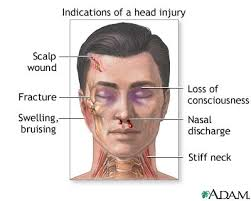
Capillary Bleeding – The head bleeds like the dickens. In the military we are trained to avoid people going into shock. Scalp capillaries will cover the entire head and face with blood very quickly from even a minor scratch. The injured will often think their entire head has been blown apart. A tire iron to the head or a grazed bullet to the scalp does not produce a smudge of blood in the hair that one puts their fingers to and shrugs off. They would instead be unable to see for blood in their eyes and if they clear them to look in a reflective service they would see themselves covered in blood and usually freak out. In these situations, the brain often sends them into shock, shutting down their ability to function and possibly causing death as it shuts down thinking it must preserve blood.

 lav3nderwolftumblr
You must be logged in to post a comment.