Tips by Samantha Stone
Originally posted on creativewritingsoftware101.com
Just as in real life, characters on a page change and develop throughout your story. This is natural and should happen. You can write a story without any character development, but…
Tag: writing

Words to describe someone’s voice
adenoidal: if someone’s voice is adenoidal, some of the sound seems to come through their nose
appealing: an appealing look, voice etc shows that you want help, approval, or agreement
breathy: with loud breathing noises
brittle: if you speak in a brittle voice, you sound as if you are about to cry
croaky: if someone’s voice sounds croaky, they speak in a low rough voice that sounds as if they have a sore throat
dead: if someone’s eyes are dead, or if their voice is dead, they feel or show no emotion
disembodied: a disembodied voice comes from someone who you cannot see
flat: spoken in a voice that does not go up and down. This word is often used for describing the speech of people from a particular region.
fruity: a fruity voice or laugh is deep and strong in a pleasant way
grating: a grating voice, laugh, or sound is unpleasant and annoying
gravelly: a gravelly voice sounds low and rough
gruff: a gruff voice has a rough low sound
guttural: a guttural sound is deep and made at the back of your throat
high-pitched: a high-pitched voice or sound is very high
hoarse: someone who is hoarse or has a hoarse voice speaks in a low rough voice, usually because their throat is sore
honeyed: honeyed words or a honeyed voice sound very nice but you cannot trust the person who is speaking
husky: a husky voice is deep and sounds hoarse (=as if you have a sore throat), often in an attractive way
low adjective: a low voice or sound is quiet and difficult to hear
low adverb: in a deep voice, or with a deep sound
matter-of-fact: used about someone’s behaviour or voice
modulated: a modulated voice is controlled and pleasant to listen to
monotonous: a monotonous sound or voice is boring and unpleasant because it does not change in loudness or become higher or lower
nasal: someone with a nasal voice sounds as if they are speaking through their nose
orotund: an orotund voice is loud and clear
penetrating: a penetrating voice or sound is so high or loud that it makes you slightly uncomfortable
plummy: a plummy voice or way of speaking is considered to be typical of an English person of a high social class. This word shows that you dislike people who speak like this.
quietly: in a quiet voice
raucous: a raucous voice or noise is loud and sounds rough
ringing: a ringing sound or voice is very loud and clear
rough: a rough voice is not soft and is unpleasant to listen to
shrill: a shrill noise or voice is very loud, high, and unpleasant
silvery: a silvery voice or sound is clear, light, and pleasant
singsong: if you speak in a singsong voice, your voice rises and falls in a musical way
small: a small voice or sound is quiet
smoky: a smoky voice or smoky eyes are sexually attractive in a slightly mysterious way
softly spoken: someone who is softly spoken has a quiet gentle voice
sotto voce adjective, adverb: in a very quiet voice
stentorian: a stentorian voice sounds very loud and severe
strangled: a strangled sound is one that someone stops before they finish making it
strangulated: strangled
strident: a strident voice or sound is loud and unpleasant
taut: used about something such as a voice or expression that shows someone is nervous or angry
thick: if your voice is thick with an emotion, it sounds less clear than usual because of the emotion
thickly: with a low voice that comes mostly from your throat
thin: a thin voice or sound is high and unpleasant to listen to
throaty: a throaty sound is low and seems to come from deep in your throat
tight: a tight voice or expression shows that you are nervous or annoyed
toneless: a toneless voice does not express any emotion
tremulous: if something such as your voice or smile is tremulous, it is not steady, for example because you are afraid or excited
wheezy: a wheezy noise sounds as if it is made by someone who has difficulty breathing
wobbly: if your voice is wobbly, it goes up and down, usually because you are frightened, not confident, or are going to cry
The spread of the black death.
Poland
Poland, tell us your secret.
Poland is the
oldnew Madagascar.If I remember correctly, Poland’s secret is that the jews where being blamed all over europe (as usual) as scapegoats for the black plague. Poland was the only place that accepted Jewish refugees, so pretty much all of them moved there.
Now, one of the major causes of getting the plague was poor hygiene. This proved very effective for the plague because everyone threw their poop into the streets because there were no sewers, and literally no one bathed because it was against their religion. Unless they were jewish, who actually bathed relatively often. When all the jews moved to Poland, they brought bathing with them, and so the plague had little effect there.
Milan survived by quarantining its city and burning down the house of anyone showing early symptoms, with the entire family inside it.
I reblogged this tons of times, but the Milan info is new.
Damn Italy, you scary.
Poland: “Hey, feeling a bit down? Have a quick wash! There, you see? All better”
Milan: “Aw, feeling a bit sick are we? BURN MOTHERFUCKER, BURN!!!!!”
Also, this might have something to do with it: from what I understand, O blood type is uncommonly… common in Poland. Something to do with large families in small villages and a LOT of intermarriage. The black plague was caused by a bacterium that produced, in its waste in the human body, wastes that very closely mimic the “B” marker sugars on red blood cells that keep the body from attacking its own immune system. Anyone who has a B blood type had an immune system that was naturally desensitized to the presence of the bacterium, and therefore was more prone to developing the disease. Anyone who had an O type was doubly lucky because the O blood type means the total absence of ANY markers, A or B, meaning that their bodys’ immune system would react quickly and violently against the invaders, while someone with an A may show symptoms and recover more slowly, while someone with B would have just died. Because O is a recessive blood type, it shows in higher numbers when more people who carry the recessive genes marry other people who also carry the recessive gene. Poland, which has a nearly 700 year history of being conquered by or partnering with every other nation in the surrounding area, was primarily an agricultural country, focused around smaller, farming communities where people were legally tied to, and required to work, “their” land, and so historically never “spread” their genes across a large area. The economy was, and had been, unstable for a very long period of time leading up to the plague, the government had been ineffective and had very little reach in comparison to the armies of the other countries around for a very very long time, and so its people largely remained in small communities where multiple generations of cross-familial inbreeding could have allowed for this more recessive gene to show up more frequently. Thus, there could be a higher percentage of O blood types in any region of the country, guaranteeing less spread of the illness and moving slower when it did manage to travel. Combine this with the fact that there were very few large, urban centers where the disease would thrive, and with the above facts, and you’ve got a lovely recipe for avoiding the plague.
Interestingly enough, as a result from the plague, the entirety of Europe now has a higher percentage of people with O blood type than any other region of the world.
WHY IS THIS ALL SO COOL
When Tumblr teaches you more about the plague than 12 years of school ever did.
Just to throw a nod in, as a medieval historian, this is all credible, and is the leading theory as to the plagues effectiveness at this point. So. Enjoy your new knowledge!
how come we never learned this is school?
WE ALL KNOW WHY
WE ALL FUCKIN’ KNOW WHY
what’s some advice you have for writing a flirty character? i don’t want them to come off as too much
This depends on a lot: age, culture, gender, etc. That being said, I do have some generic advice to give.
Generic:
Eye Contact. Eye contact is a really major part of flirting. First, it establishes that you see and acknowledge the person. Beyond that, if they maintain eye contact, it can indicate mutual interest. It is also a general part of open body language, which is really important (and my next point).
Open body language. Shoulders open, chest forward, arms not crossed, back straight. Someone who is slouching or has their arms crossed often looks closed up, and while in some cases that may come across as cool, it doesn’t come across as approachable, which is essentially the point of flirting.
Smiling. Again, your character wants to look approachable. Smiling is a really easy way to do that. It is also a good way to show that the attention is positive, as opposed to staring at someone because they have food in their teeth, are doing something that they should stop doing, etc.
Physical contact. If your character is close to someone that they’re flirting with, they should touch them. It doesn’t have to (and shouldn’t) be aggressive grabbing or patting, but instead touching a shoulder, arm, hand, or knee. They should also position themselves close to someone that they’re flirting with even when they’re not touching.
Teasing. This is a really common verbal way of flirting, though one needs to be done carefully to make sure it’s not mean, because it can cross that line. If the character does cross that line accidentally, or hits a nerve that they don’t know about, have them cover it up with some more flirting, something that would keep the person’s attention and make them not be angry anymore.
Funny stories. Telling a funny story is another good way of flirting, because laughter can get people to open up. The conversation would probably need to be more than just funny stories, but it can be a good way for your character to get someone to open up.
Be suggestive. Again, something that a character would need to be careful of (and fairly confident to do). This can also be done over text, messaging, etc. so it can be a long-term way of flirting.
Awareness of others. A flirty character should be aware of the people that they’re flirting with. That isn’t just knowing that they exist or physically where they are, but what their responses and body language are. Unless you want them to be a mean or harassing flirt, they should be aware of when the person is sending the sign that they want them to continue and when the person is trying to get them to leave them alone. If it’s the latter, they should probably leave them alone, because otherwise they just come across as being obnoxious and/or a bad person.
For females:
Accentuate their chest and/or butt. For the chest especially, a small chest can be disguised depending on the clothing, and so a flirty girl with a small chest would probably wear clothing that disguised it, while a flirty girl with a larger chest would probably wear clothing that showed more of it off. Necklaces are also useful, because playing with them can draw the eye to the chest.
For males:
Make sure the character doesn’t come across as creepy/too aggressive. I have read more stories than I’d like where a guy’s “flirting” comes across as creepily sexually aggressive, especially when he doesn’t know the girl. This tends to happen significantly less with girls flirting, but when men are written as being suggestive, it tends to be essentially “here are all of the ways I am planning to have sex with you” instead of “oh, I’m not dressed because I just got out of the shower ;)”. The latter can be flirty-suggestive. The former usually reads as stalker-rapist-creepy.
Think about why the character is flirting. For some people, it is because they just like to flirt. For some, it might be because they’re looking for sex. For some, it might be because they’re looking for a relationship. For some, it might be because they like the power it gives them. The way they flirt should depend on their reason for doing so.
• Use the hand you write with.
• Make a fist with your thumb outside, not tucked inside. If it’s tucked inside your fist, when you punch someone, you might break your thumb. The thumb goes across your fingers, not on the side.
• Don’t be like in the movies—don’t aim for the face. Face punches don’t usually stop people, and you can miss when they duck their head or break your hand on their jaw. If you want to get away quickly, or end a fight, aim for the chest, or the ribs. If you really want to do some damage, e.g., you’re being attacked, aim for the throat, which will make it hard for your attacker to breathe for a hot minute.
• When you punch, you want to aim and hit with your first two knuckles. Not the flats of your fingers, and not your ring or pinky knuckles, which can break more easily. You can use your weight, if you’re on your feet, to add wallop, and spring into a punch with your feet and torso.
Useful information, esp. if you haven’t taken self defense.
I reblogged this once before to add this and I’ll do it again…
keep your wrist straight.
You can also risk breaking your wrist if you allow it to bend. I actually can’t believe this isn’t in there.
Other good pointers:
- if your attacker is male, go for his junk – especially if he’s wearing loose pants. There’s no sportsmanship when it comes to assault so fuck them balls UP
- punching pretty much ANYWHERE in the face is going to actually hurt you a LOT (just think – you’re punching your bones into their bones and ow). If you’re going for the face, my suggestion is to strick upwards with your palm.
see that meaty portion highlighted in red? There’s a lot of muscle and fat right there which makes it excellent for striking. Hold your hand as shown and aim for the nose or chin (though I’ve been told in extreme circumstances, doing this to the nose can be fatal but I’ve never really heard if this is true or not) and just aim upwards
- other delicate areas:
- the shin (hurts like a bitch if you kick it right – also, you can hit this spot if you’re being held in a choke-hold and if your attacker has to move in order to stop you from kicking him, he’ll have to angle his body so as to expose his stomach and crotch to the wild spastic jabbings of your elbows)
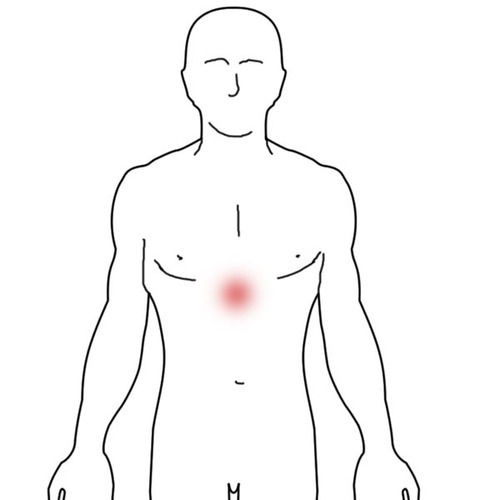
- the solar plexus (either jab while holding your hand in a sort of spear position or use your elbows – unless you’re super strong, your punch probably won’t wind your attacker. Your elbow or a spear hand will, however)
Originally in (most) martial arts, you hit the solar plexus because it supposedly contained an important chakra. Now we know that it actually also contains like a bunch of necessary organs that are exposed just below your ribs and is also (roughly) where your diaphragm lives so getting punched there is not pleasant.
- the clavicle (from experience, getting hit in your clavicle HURTS LIKE A MOTHERFUCKER. If you strike downwards with your knuckles, the person might just cry. Like I did.)
- the ear (this is probably the best place to punch besides the throat. It’s all cartilage so it probably won’t hurt you all that much and most people will be like “DUDE YOU PUNCHED ME IN THE EAR WHAT THE HELL”)
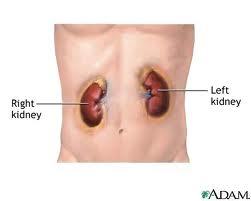
- the kidneys (this is harder to hit without training but if you somehow get your attacker’s back to face you, try to hit’em in the kidneys. Again, from experience, this FUCKING HURTS. You can’t really hit the kidneys from the front with any effect but from the back it is super painful)
- if you’re held in a choke-hold, try turning your head so the forearm isn’t pressed into your throat. If you can position yourself right, you can sort of force your chin into the crook of the elbow, making you able to still receive (limited) oxygen and provide time for you to kick some shins or elbow some spleens and shit
-Also, remember that a guy’s junk is not an off-button. Don’t think that you can rely on a swift kick to the balls to immediately incapacitate him in an emergency. Adrenaline and anger can keep somebody going for a long time even through extreme pain, and if you expect to end a fight with a single groin-attack you might be caught off-guard when he doesn’t drop. Certainly go for it if you get the chance, but keep hitting him until the fight is over.
-Draw blood if you can, especially if you can draw it from the face or the eyes. Blood in the eyes is not just a good way to impair your attacker’s vision, it’s also a really good way to freak them out and let them know that they might be getting more than they bargained for by picking a fight with you.
-Elbows and knees are really powerful weapons. Elbows are very sharp and very strong and if you are in close-range they are often more effective than trying to throw a punch.
-Yelling and shouting makes you scary.
Nothing much to add to this, it’s pretty much all there. So. Reblog. Oh, also, it’s really easy to break a nose – go for the eyes too. All it takes to avoid a shot to the throat is tucking your chin.
Also, that part about the ear – don’t punch. An open hand over the ear hurts a lot.



Free Mythology Books for Kindle!
Can’t speak for the quality of these books, but I figure that free books are free books and they are worth the read for anyone with an interest in mythology!
Note: All of these books are free as of this writing and most are public domain, but always double check the price before clicking to purchase.
- The Children of Odin The Book of Northern Myths
- Asgard Stories Tales from Norse Mythology
- Myths & Legends of the Celtic Race
- Viking Tales
- Myths and Folk Tales of Ireland
- Hero-Myths & Legends of the British Race
- Aw-Aw-Tam Indian Nights Being the myths and legends of the Pimas of Arizona
- Myths and Legends of the Sioux
- Myths and Legends of the Great Plains
- Myths and Legends of California and the Old Southwest
- American Hero-Myths: A Study in the Native Religions of the Western Continent
- Nights With Uncle Remus: Myths and Legends of the Old Plantation
- Myths of Babylonia and Assyria
- Myths and Legends of Ancient Greece and Rome
- Myths and Legends of China
- Curious Myths of the Middle Ages
- Bible Myths and their Parallels in other Religions: Being a Comparison of the Old and New Testament Myths and Miracles with those of the Heathen Nations … Considering also their Origin and Meaning
- Myths and Legends of All Nations: Famous Stories from the Greek, German, English, Spanish, Scandinavian, Danish, French, Russian, Bohemian, Italian and other sources
- A Book of Myths
- Myths That Every Child Should Know: A Selection Of The Classic Myths Of All Times For Young
- Famous Tales of Fact and Fancy: Myths and Legends of the Nations of the World Retold for Boys and Girls
EDIT: And for those of you that do not have a Kindle — THERE IS AN APP for that! You can get the Kindle app for ipod/iphone etc here, you can also get the program for PC here, and finally the one for Mac over here!
I’m writing a story which frequently uses the word focus as an object. If I wanted to say it in plural, would it be focus’ or focuses?
It would be either “foci” or “focuses”. Both are correct. It doesn’t matter which one you use as long as you keep it consistent, but the latter is far more common.
Focus’ would be used to show possession. For example, if we have several objects that we call “focuses”:
(plural): The focus’ colors are fading.
(singular):
- The focus’ color is fading. or:
- The focus’s color is fading.
The singular version is true for names that end in “s” as well. For example, James’ and James’s are both correct. Just pick one form and stick with it.
Know Your Burns
We’ve all got to that point in our writing where you want a character to be injured, and you want it to be as serious as possible, but at the same time you still want the character to live (that is, unless you are George R.R. Martin), and you still want them to be…

This might be useful for some of you who are interested in surgery! Credit belongs to ASAPScience on Facebook. (Follow them for more cool science related facts and info!)
Fighting Words
Attack
Advance, assail, assault, beset, charge, drive, foray, hurtle, launch, lunge, maul, press forward, push, rush, storm, surge
Break
Blast, breach, carve, cleave, cleft, crack, cripple, crunch, demolish, destroy, disable, disfigure, disintegrate, divide, fragment, impair, mangle, mar, perforate, pulverize, rend, rift, ruin, rupture, sever, shatter, snap, splinter, split, wreck
Enter
Access, barge in, barrel in, horn in, infiltrate, intrude, invade, penetrate
Explode
Blow up, bomb, burst, detonate, erupt, fragment, go off, ignite
Fall
Collapse, descend, dive, drop, fall prone, header, lapse, plummet, plunge, slip, slump, sprawl, topple, trip, tumble
Fast
Agile, electric, fleet, hasty, nimble, quick, rapid, speedy, swift
Grab
capture, catch, clasp, grasp, grip, latch on to, nab, seize, snag, snatch, take
Hit
Bat, batter, bash, blow, bludgeon, box, buffet, bust, chop, clobber, clout, cuff, flail, hammer, haymaker, jab, knock, lash, paste, pummel, punch, rabbit punch, slap, slug, smash, sock, strike, swat, swipe, thrash, thump, uppercut, wallop
Jump
Bounce, bound, hop, jerk, jolt, leap, pounce, rise, skip, spring
Kill
Annihilate, behead, dispatch, eliminate, eradicate, erase, execute, exterminate, extirpate, finish, immolate, liquidate, massacre, murder, neutralize, obliterate, purge, slaughter, slay, snuff, terminate, waste
Run
Bolt, dart, dash, escape, flee, gallop, hurry, lope, pace, scramble, race, rush, sprint, whisk
Scream
Bark, bellow, call, cry, holler, howl, roar, screech, shout, shriek, wail, yell, yelp
Shoot
Blast, fire at, gun, open fire, nail, pick off, plug, pop, pull the trigger, salvo
Stab
Cut, gash, gouge, hack, hew, impale, incise, lacerate, pierce, prick, puncture, slash, slice, stick, thrust
Stop
Avert, bar, block, cease, check, defend, deflect, fend off, guard, halt, hold off, keep at bay, lull, obstruct, parry, push back, prevent, rebuff, repel, repulse, resist, shield, stave off, stun, ward off
Throw
Cast, catapult, chuck, eject, fire, fling, hurl, launch, lob, pelt, pepper, pitch, project, propel, shoot, shower, sling, spray, strew, toss
Other
Accelerate, ambush, barrage, barricade, beat, bombard, buck, bushwhack, brandish, careen, clash, cleave, clench, clip, collide, crash, crawl, creep, crush, damage, dance, disappear, dodge, emit, exhaust, expel, fence, fly, freeze, frenzy, glance, grapple, grind, hasten, heave, hem in, hook, leave, lift, lurch, maneuver, net, onslaught, overtake, overwhelm, provoke, pursue, push, rally, reach, recoil, regress, retreat, rigor, rive, scatter, shove, shrivel, slip away, smatter, splatter, step, strain, stretch, strive, stroke, struggle, suppress, swerve, swing, swish, swoop, thrash, twirl, upset, urgent, vanish, vanquish, volley, waylay, wield, wither, wrestle, yield
 lav3nderwolftumblr
You must be logged in to post a comment.