ONE OF THE MOST DANGEROUS PICTURES TAKEN
The above picture you see is off the elephant’s foot, a radioactive mass. It’s from the Chernobyl nuclear disaster.
These are the effects:
After just 30 seconds of exposure, dizziness and fatigue will find you a week later. Two minutes of exposure and your cells will begin to hemorrhage (ruptured blood vessels); four minutes: vomiting, diarrhea, and fever. 300 seconds and you have two days to live.
The coolest thing about this photo is definitely the radiation damage. Look at the bright squiggles, and the way the man seems to be in two places at once. This is because even as the photo is being taken, the radiation is causing severe damage to the camera.
According to another source, the man in the photograph and the cameraman are now dead. Apparently, the radiation would have been too high for them to live more than a few years after this, even if they had just run in, snapped the photo, and ran out again. If they spent more than a few seconds here, it’s possible they could have died even quicker.
Tag: writing
As you’re writing stories about myths and legends, please consider these neglected beasties from cultures around the world.
But first read this post on cultural appropriation, as many of the creatures or gods are important to other cultures.
concernedresidentofbakerstreet:
driving-an-impala-in-isengard:
A tip from your favorite nurse
(that’d be me)
Always have eggs in your fridge
You just never know when someone will split their head open
Or cut their finger while cooking
And so on
See that membrane there?
While the blood is gushing – hold pressure and crack open an egg
Peel that there membrane off and put it on the wound (continue holding pressure)
The membrane will harden and keep the wound closed until you can get to the ER for stitches
If you even need them that is
Nature: 1, Band aids: 0
You’re welcome.
I did some research on this (because I do that now, fucking science get out) and it seems that this was done in the early 1900s somewhat frequently. It was used as a way to treat just about any kind of skin wound, from burn to cut to in at least one case an ulcer. It actually helps the wound heal not by preventing blood loss but by replacing part of the skin tissue and helping it grow.
It also helps in healing scars and reducing their visibility.
Whoah science.
Neato.
Supercool.
Also, if you have a splinter, smack one of these things on there and it will draw it out of your skin. No more shitting around with pliers.
it will also suck the poison stuff out of mosquito bites and stop them from being itchy
woaaah i didnt know!! awesome stuff 😀
Did not know the mosquito bite or splinter thing! EGGS—IS THERE ANYTHING THEY CAN’T DO?
They cant fix the economy

Do you have any advice on writing the loss of an eye? Like: short term and long term consequences?
Here are some resources to look through.
Short term:
- Medical care after removal of the eye, but before a prosthetic
- Dealing with strong emotions re: eye loss
- Mind map: Adjusting to eye loss
- Adapting to loss of an eye
Long term:
- Prosthetic eye FAQ
- Prosthetic eyes
- Adapting to monocular vision
- 5 things I learned from losing an eye
- Implications of acquired monocular vision
- Eye loss and sports
- Eye loss and driving
- Experiences of monocular vision in Australia
-Headless
Do you have any advice for someone trying to get a story started? I have all the characters and the plot pretty secure in my head but I’m having a difficult time starting it on paper. Are there any writing exercises you’d suggest to get creativity flowing?
- Freewrite. Sit down and write. It doesn’t have to make sense or flow or anything—just write something. You can start off describing a character and get to describing their role in the plot, how awesome their character arc is, something really fantastic you want to do with their development, and discover all kinds of things to include.
- Stream of consciousness. Ditch your sentence structure, capitalization, punctuation, all of that. Write what you’re thinking. In this exercise, you focus on getting words on the paper, no matter what words they are. You can rearrange and edit them into proper sentences later. Right now, just get them out.
- Try a mind map. Put words, ideas, plot points, characters in bubbles and branch out with details and story progression. This can help you plan out a scene, a character’s development, the entire plot, or just help you get thinking about the story.
- Write that scene. You know the one. That scene is the one you look forward to writing when you think about your plot. Start somewhere that interests you and get excited about your story. Jump around within your story and write whatever you want to write.
Check our getting started tag and stuck? tag for more thoughts. Best of luck!
-Headless
How to Go to College for Free: The Best Open Classes for Writers (Fall 2014)
Massively Open Online Courses are the new vogue way to take control of your education and your career, and it’s the best thing. Higher education should be a right, but many of us can’t afford or can’t even access modern college courses. Anyone with conviction and a few extra hours a week can get themselves a college education from some of the best teachers in the world. You can even put finished courses on your resume. Just a few colleges that offer free online courses: MIT, Boston University, Dartmouth, Cornell, University of Tokyo, Harvard, Yale University, and the University of Geneva – and that’s barely scratching the surface.
Those are some of the most funded, most prestigiously staffed universities in the world. The education offered by them, for free, is at your fingers. Just because the world might hold degrees and the brick and mortar institutions of modern universities as a reward for the already privileged or the lucky doesn’t mean you don’t have the resources to learn. Throwing the exposition away, here are my favorite courses for writers available this fall semester:
- English Grammar and Style taught by University of Queensland’s Roslyn Petelin, Gabrielle O’Ryan, and Michael Lefcourt. It’s a basic writing course, taught by professors who understand English like the backs of their hands.
The Ancient Greek Hero in 24 Hours: Epic and Lyrictaught by Harvard’s Professor Gregory Nagy. Course on heroic story structure that walks you through the ancient Greek heroes and stories that set up the future of western literature. Breaks down the Epic and Lyric forms.
The Ancient Greek Hero in 24 Hours: Signs of the Hero in Epic and Iconography Part two of the course above, this time moving to the influence of visual heroic iconography.
Fantasy and Science Fiction: The Human Mind, Our Modern World taught by Professor Eric Rabkin. Genre course that explores the two major fiction forms as a reflection of human society. Covers a lot of pop culture favorites.
Unbinding Prometheus taught by Eric Alan Weinstein through Open Learning. The class, starting in November, will explore the meaning of Percy Shelley’s work and the impact the man (who believed writing could free mankind from their shackles) has had on the world he left behind.
The Divine Comedy: Dante’s Journey to Freedom taught by many Georgetown professors, including Dante and Derrida: Face to Face author Frank Ambrosio. It looks frankly awesome, talking about the modern reader and Alighieri’s work, and the first sentence of the class description speaks for itself: Students will question for themselves the meaning of human freedom, responsibility and identity by reading and responding to Dante Alighieri’s Divine Comedy.
Online Games: Literature, New Media, and Narrative taught by Vanderbilt University’s Jay Clayton. This class is about Lord of the Rings Online. It’s not actively running, but you can access all the materials online.
Laura Ingalls Wilder: Exploring Her Work & Writing Life taught by Missouri State’s Pamela Smith Hill, an Ingalls Wilder scholar. Wilder’s Little House series has informed our perceptions of her era in North American history, but there’s more than meets the eye in her stories. Just like Shakespeare, there are more than a few controversies around authorship, and a lot to talk about in this course.
How Writers Write Fiction taught by University of Iowa’s professor (and author of Things of the Hidden God) Christopher Merrill. The course presents a curated collection of short, intimate talks created by fifty authors of poetry, fiction, nonfiction, and plays that you can’t catch anywhere else. Features weekly writing assignments.
Poetry: What It Is, and How to Understand It taught by George Washington University’s Margaret Soltan. A class in modern poetry, the whys and hows, and a cultural learning class we’d recommend for anyone trying to broaden their artistic perspective.
EXTRA CREDIT: Important and interesting classes I would recommended.
Understanding Violence taught by Professors Deb Houry and Pamela Scully. Covers elements of biology, sociology, and psychology. You’ll study the biological and psychological causes of violence, and how violence is reported and portrayed in the media. Seems like an excellent research course for action writers.
Social Entrepeneurship taught by Professors Kai Hockerts, Kristjan Jespersen, Ester Barinaga, Anirudh Agrawal, Sudhanshu Rai, and Robert Austin. Doesn’t just talk about how to use social media for your own benefit — the course is meant to break down how to use social media and community engagement for global change.
- Comic Books and Graphic Novels taught by University of Colorado Boulder’s William Kuskin. Explores the medium at length. Has special class topics on Batman, Neil Gaiman, Pop Culture, Defining Art, and Gender.
— Audrey Erin Redpath (@audreyredpath)
Awesome Sites and Links for Writers
Just about every writer out there has several go-to websites that they use when it comes to their writing. Be it for creativity, writer’s block, to put you in the mood or general writing help. These are mine and I listed them in hopes that you’ll find something that you’ll like or will find something useful for you. I’ve also included some websites that sound interesting.
Spelling & Grammar
- Grammar Girl — Grammar Girl’s famous Quick and Dirty Tips (delivered via blog or podcast) will help you keep your creative writing error free.
- The Owl — is Purdue University’s Online Writing Lab (OWL) it’s a great resource for grammar guides, style tips and other information that can help with your writing, especially academics.
- Tip of My Tongue — have you ever had trouble of thinking of a specific word that you can’t remember what it is? Well, this site will help you narrow down your thoughts and find that word you’ve been looking for. It can be extremely frustrating when you have to stop writing because you get a stuck on a word, so this should help cut that down.
- Free Rice – is a great way to test your vocabulary knowledge. What’s even better about this site is that with every correct answer, they donate 10 grains of rice to the United Nations World Food Program. So, please disable your adblock since they use the ads on the site to generate the money to buy the rice.
- HyperGrammar — the University of Ottawa offers up a one-stop guide for proper spelling, structure, and punctuation on this site.
- AutoCrit — the AutoCrit Editing Wizard can check writing for grammar errors, clichés and other no-no’s. It also provides a number of other writing resources as well.
- Writer’s Digest — learn how to improve your writing, find an agent, and even get published with the help of the varied blogs on this site.
- Syntaxis — it allows you to test your knowledge of grammar with a ten-question quiz. The questions change every time you take the quiz so users are sure to be challenged each time around. It definitely helps writers know if there’s something that they need to brush up on.
- Word Frequency Counter — this counter allows you to count the frequency usage of each word in your text.
Tools
- Copyscape — is a free service that you can use to learn if anyone has plagiarized your work. It’s pretty useful for those that want to check for fanfiction plagiarism.
- Write or Die — is an application for Windows, Mac and Linux which aims to eliminate writer’s block by providing consequences for procrastination.
- Written? Kitten! — is just like Write of Die, but it’s a kinder version. They use positive reinforcement, so everytime you reach a goal they reward you with an adorable picture of a kitten.
Information & Data
- RefDesk — it has an enormous collection of reference materials, searchable databases and other great resources that can’t be found anywhere else. It’s great to use when you need to find something and check your facts.
- Bib Me — it makes it easy to create citations, build bibliographies and acknowledge other people’s work. This is definitely something that academics will love. It’s basically a bibliography generator that automatically fills in a works cited page in MLA, APA, Chicago or Turbian formats.
- Internet Public Library — this online library is full of resources that are free for anyone to use, from newspaper and magazine articles to special collections.
- The Library of Congress — if you’re looking for primary documents and information, the Library of Congress is a great place to start. It has millions of items in its archives, many of which are accessible right from the website.
- WebMD — is a handy medical database loaded with information. It’s not a substitute for a doctor, but can give you a lot of good information on diseases, symptoms, treatments, etc.
- Google Scholar – is an online, freely accessible search engine that lets users look for both physical and digital copies of articles. It searches a wide variety of sources, including academic publishers, universities, and preprint depositories and so on. While Google Scholar does search for print and online scholarly information, it is important to understand that the resource is not a database.
- The Old Farmer’s Almanac — this classic almanac offers yearly information on astronomical events, weather conditions and forecasts, recipes, and gardening tips.
- State Health Facts — Kaiser Family Foundation provides this database, full of health facts on a state-by-state basis that address everything from medicare to women’s health.
- U.S. Census Bureau — Learn more about the trends and demographics of America with information drawn from the Census Bureau’s online site.
- Wikipedia — this shouldn’t be used as your sole source, but it can be a great way to get basic information and find out where to look for additional references.
- Finding Data on the Internet — a great site that list links that can tell you where you can find the inflation rate, crime statistics, and other data.
Word References
- RhymeZone — whether you’re writing poetry, songs, or something else entirely, you can get help rhyming words with this site.
- Acronym Finder — with more than 565,000 human-edited entries, Acronym Finder is the world’s largest and most comprehensive dictionary of acronyms, abbreviations, and initials.
- Symbols.com — is a unique online encyclopedia that contains everything about symbols, signs, flags and glyphs arranged by categories such as culture, country, religion, and more.
- OneLook Reverse Dictionary — is a dictionary that lets you describe a concept and get back a list of words and phrases related to that concept. Your description can be a few words, a sentence, a question, or even just a single word.
- The Alternative Dictionaries — is a site that you can look up slang words in all types of languages, including Egyptian Arabic, Cherokee, Cantonese, Norwegian and many, many others.
- Online Etymology Dictionary — it gives you the history and derivation of any word. Etymologies are not definitions; they’re explanations of what our words meant and how they sounded 600 or 2,000 years ago.
- MediLexicon — is a comprehensive dictionary of medical, pharmaceutical, biomedical, and health care abbreviations and acronyms.
- Merriam Webster Online – the online version of the classic dictionary also provides a thesaurus and a medical dictionary.
- Multilingual Dictionary – that translate whatever you need from 30 different languages with this easy-to-use site.
Writing Software
- Open Office — why pay for Microsoft products when you can create free documents with Open Office? This open source software provides similar tools to the Microsoft Office Suite, including spreadsheets, a word processor, the ability to create multimedia presentations, and more.
- LibreOffice — is a free and open source office suite. It was forked from OpenOffice.org in 2010, which was an open-sourced version of the earlier StarOffice. The LibreOffice suite comprises programs to do word processing, spreadsheets, slideshows, diagrams and drawings, maintain databases, and compose math formula.
- Scrivener — is not a free program, but it’s certainly a very popular one. It’s great for organizing research, planning drafts, and writing novels, articles, short stories, and even screenplays.
- OmmWriter — is a free simple text processor that gives you a distraction free environment. So you can focus only on your writing without being tempted or distracted by other programs on your computer.
- Evernote — is a free app for your smartphone and computer that stores everything you could possibly imagine losing track of, like a boarding pass, receipt, article you want to read, to do list, or even a simple typed note. The app works brilliantly, keeping everything in sync between your computer, smartphone, or tablet. It’s definitely a useful app for writers when you have ideas on the go.
- Storybook — this open source software can make it easier to manage your plotlines, characters, data, and other critical information while penning a novel.
- Script Frenzy — scriptwriters will appreciate this software. It offers an easy layout that helps outline plots as well as providing storyboard features, index cards, and even sound and photo integration.
Creativity, Fun & Miscellaneous
- National Novel Writing Month — is one of the most well-known writing challenges in the writing community, National Novel Writing Month pushes you to write 50,000 words in 30 days (for the whole month of November).
- WritingFix — a fun site that creates writing prompts on the spot. The site currently has several options—prompts for right-brained people, for left-brained people, for kids—and is working to add prompts on classic literature, music and more.
- Creative Writing Prompts — the site is exactly what it says. They have 100+ and more, of prompts that you can choose from.
- My Fonts — is the world’s largest collection of fonts. You can even upload an image containing a font that you like, and this tells you what it is.
- Story Starters — this website offers over one trillion randomly generated story starters for creative writers.
- The Gutenberg Project — this site is perfect for those who like to read and/or have an ereader. There’s over 33,000 ebooks you can download for free.
- The Imagination Prompt Generator — Click through the prompts to generate different ideas in response to questions like “Is there a God?” and “If your tears could speak to you, what would they say?”
- The Phrase Finder – this handy site helps you hunt down famous phrases, along with their origins. It also offers a phrase thesaurus that can help you create headlines, lyrics, and much more.
- Storybird – this site allows you to write a picture book. They provided the gorgeous artwork and you create the story for it, or just read the stories that others have created.
- Language Is a Virus — the automatic prompt generator on this site can provide writers with an endless number of creative writing prompts. Other resources include writing exercises and information on dozens of different authors.
Background Noise/Music
- SimplyNoise — a free white noise sounds that you can use to drown out everything around you and help you focus on your writing.
- Rainy Mood — from the same founders of Simply Noise, this website offers the pleasant sound of rain and thunderstorms. There’s a slide volume control, which you can increase the intensity of the noise (gentle shower to heavy storm), thunder mode (often, few, rare), oscillation button, and a sleep timer.
- Coffitivity — a site that provides three background noises: Morning Murmur (a gentle hum), Lunchtime Lounge (bustling chatter), and University Undertones (campus cafe). A pause button is provided whenever you need a bladder break, and a sliding volume control to give you the freedom to find the perfect level for your needs and moods. It’s also available as an android app, iOS app, and for Mac desktop.
- Rainy Cafe — it provides background chatter in coffee shops (similar to Coffitivity) AND the sound of rain (similar to Simply Rain). There’s also individual volume and on/off control for each sound category.
- 8tracks — is an internet radio website and everyone can listen for free. Unlike other music oriented social network such as Pandora or Spotify, 8tracks does’t have commercial interruption. Users create free accounts and can either browse the site and listen to other user-created mixes, and/or they can create their own mixes. It’s a perfect place to listen to other writer’s playlist, share yours or find music for specific characters or moods.
Primary Surgery Vol.2 – Trauma: GENERAL METHOD FOR AMPUTATIONS
No blood or color images, but some graphic (black and white) illustrations of amputations and some fantastic information.
Huge props to zheenterprize for tipping us off about this link!
Primary Surgery Vol.2 – Trauma: GENERAL METHOD FOR AMPUTATIONS
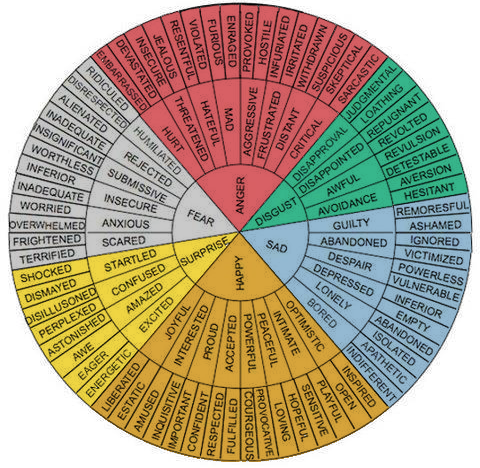
The most valuable chart…
yes thanks for colouring it I had a hard time reading that
// I’m going to reblog this to help all RPers when it comes to descriptions
// Even if you’re a great RPer you still need this.
// To describe
// y’know
// the things
The Dancing Men code! Perfect for leaving mysterious notes lying around the house.
 lav3nderwolftumblr
You must be logged in to post a comment.