I just recently saw one of those “Here’s a list of all the fucked up things PETA has done” posts. In the notes, I see people saying things like “If you really want to help, donate to or volunteer at your local animal shelter!” Don’t get me wrong, donating to or volunteering at an animal shelter is a wonderful thing to do. However, I noticed that… this was the only solution mentioned in the comments.
I’m starting to notice a pattern here. These people legitimately have no idea that animal rights involves more than just pets… and, ironically, it makes them part of the overall problem.
Non-vegans, stop pretending like you give a damn about animal rights, because you don’t. Stop speaking about animal rights as if you know what the fuck you’re talking about, because clearly you don’t. You only care about pets, and only about helping animals when it benefits you. You all treat animal rights like some hobby you get to do on the weekend and pat yourself on the back for, but as vegans, we are living it every day.
You don’t get to criticize PETA for being a harmful organization and feel good about yourself while you’re a part of the very system they were founded to fight against. Bottom line.
“Stop pretending like you give a damn about animal rights.”
Who the fuck here is pretending to be in favor of animal rights? Animal rights is bullshit!
Consider this: those people are saying to donate and volunteer for local humane societies instead of other things because the main issue with PeTA is that they’re a so-called “animal shelter” that kills over 90% of animals in their care. This is why they’re talking about shelters! It’s on topic!
Animal rights is horrible and they don’t actually do anything to better animals. It’s ironic that you’re preaching at people for not caring about animals or treating animals like a hobby for volunteering at shelters when in the same breath you’re defending an organisation that actively harms animals.
So what do you do for animals then @opinionatedvegan? Instead of just talking about things you have no idea about, complaining about an industry you have know nothing about, defending a horrible harmful organisation bent on making $$ off pretending to care about animals and somehow convincing yourself that being a vegan is somehow “helping animals”.
As someone who has first hand experience and education in the agricultural industry, as well as has read all the scientific research behind it and has basic understanding of how a global industry works in general. I can tell you with absolute certainty that being vegan does literally nothing for livestock. A person volunteering once a week at a shelter does more good for animals then a vegan does in a lifetime.
If you actually wanted to help improve the life and welfare of livestock I’d look into actually being involved in animal welfare organisations that push for better stricter legislation.
But what do I know about this. I’m only a zoologist majoring in conservation and planning to do my Mres in honey bee behaviour and hopefully in the future study my PhD on Australian native bee species. I also am active in the Australian scientific community; assisting with research on emu’s, small native mammals, mange on wombats, and most currently helping create a database on all the information we know about alpine invertebrates found around the world in the last 25 years. I also volunteer (when I can, I’m obviously pretty busy) at an animal shelter.
Discouraging people from helping at shelters, when that’s usually the only thing they might be able to do, is frankly stupid. Shelters are a good way to help animals and it’s always rewarding.
There’s loads of other volunteering people can get involved with; especially when it comes to native / wildlife but this is often more difficult to get into, if you don’t have any qualifications. Hence why most people tend to help out at shelters.
Another big way to help is to get involved in animal welfare organisations.
Now there’s a huge difference between animal rights and animal welfare. Animal rights are groups like peta and vegan organisations that push an agenda as well as make money off people. Animal welfare organisations are properly regulated groups and are non-for-profit. They also have important roles in creating government legislation or laws in order to better the treatment of animals and are also often on ethics committees (these are committees that view animal ethics forms submitted by scientists, to ensure that animals within research are treated without cruelty).
Furthermore some animal rights groups are even labelled as domestic terrorist organisations and are often involved in vandalizing and terrorizing people and property. As well as “rescuing” or “saving” animals only to end up killing them or having them worse off.
The biggest difference between animal rights and welfare is simple. Animal rights believe that animals should be completely equal under the law as humans; this means they get the same rights ect. (this is obviously ridiculous), while animal welfare ensure the proper treatment and care of animals.
In short, don’t give a fuck about animal rights, give a fuck about animal welfare!
Volunteer at shelters, get involved in animal welfare!, get involved in conservation efforts (important ones not pandas or other charismatic megafauna) even if that means just donating, fight for better government legislation for the environment and animals, support your local farmers and bee keepers!
I’m now have my degree in zoology and am now half-way through my Mres degree, studying neruoethology in honeybees and I still 100% stand behind this.
I absolutely agree with everything @zoologicallyobsessed says here. Also, I absolutely disagree with everything a particular opinionated vegan says.
Ready for a plot twist? I’ve been vegan for so long I have to do math to answer “So how long have you been vegan?” Which is not a question I have to answer often because I purposefully remain in the vegan closet to avoid being associated with misinformed idealists with superiority complexes and an incomplete understanding of how the world actually works.
And I get it, I drank the peta kookaid when I was an outcast teen who had never met another vegetarian before, and I was an officer for the animal rights group at college in the early 2000s. So, as much as zoologicallyobsessed knows the ag industry from the inside, I know the “animal rights” industry (and YES it IS an industry) from the inside. I had friends who interned at peta, like, actually knew the people running the org. They are a bunch of heartless thieves who couldn’t give fewer craps about animals, and most of peta’s board (at the time, probably still is) wasn’t even vegetarian. Basically everything coming out of peta is propaganda.
Want to know what good being vegan does for the animals, from the perspective of a veteran vegan? It doesn’t. Being vegan is a personal choice, often one available only to those with considerable privilege. It confers no moral superiority over people who actually do something that actually helps actual animals, regardless of what that person chooses to eat for dinner. If you want to help animals? You have to do something.
I love animals. I love nature. I love the environment. So I volunteer hundreds of hours a year with organizations focusing on conservation and environmental stewardship. I go out into the community and give lectures on how insects are absolutely essential to healthy ecosystems. I contribute to citizen science projects tracking the effects of climate change on habitat and population distribution.
Did you know that hunters were instrumental in conservation and the development of the endangered species act? Or that without the funds received from the sale of fishing and hunting licenses, many state parks wouldn’t be able to stay open?
You can eat or not eat whatever you want, but if you want to make an impact on animal suffering, yelling at people on tumblr is not where I would personally start.
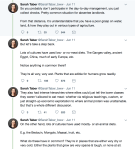
Farming systems need to fit into their natural and social environment. Sometimes we describe this as a socio-ecological niche.
Caption;
In a minute.
So, taking it that you said you live in
Arizona and “your family has a farm in Chihuahua,” A quick
congratulations are in order. You’re an absentee landowner! You’re
right at the peak of farming’s social pyramid. Living the dream.
So you probably don’t participate in
the day-to-day management, you just collect checks. Pretty common
situation for absentee landlords. From that distance, it’s
understandable that you have a poor grasp on water, land, and how
they play out in various types of agriculture.
But let’s take a step back.
Lots of cultures have used low or no
meat diets. The Ganges valley, ancient Egypt, China, much of early
Europe, ect.
Notice anything in common there?
They’re all very, very wet. Plants that
are edible for humans grow readily.
They also had intense hierarchies where
elites could just tell the lower classes they weren’t allowed to eat
meat-whether via religious teachings, custom, or just straight-up
economic exploitation to where animal protein was unattainable. But
that’s a whole different discussion.
On the other hand, lots of cultures
have used mostly or all animal diets.
E.G. The Bedouin, Mongols, Maasai,
Inuit, ect.
What do these have in common? They’re
in places that are either very dry or very cold. Either the plants
that grow are very sparse & tough, or none at all.
Humans can only digest specific types
of plant matter. We need tender stems, leaves & fruit; enlarged
seeds, or energy storing roots.
The entire rest of the plant is
inedible for us. Stalk, branch, dry leaves, ect.
And without intense irrigation, the only plants that grow in dry areas are entirely made of things
that humans can’t digest. They’re almost entirely cellulose. Tough
stalks, fibrous leaves covered in wax and hair, thorns, ect.
That’s why we call these areas ‘scrub’.
The only use humans can make of the natural vegetation is to scrub
pots.
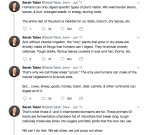
But…cows, sheep, goats, horses,
bison, deer, camels & other ruminants can digest all of it.
That’s what those 3 and 4 chambered
stomachs are for. These animals GI tracts are fermentation chambers
full of microflora that break long, tough cellulose molecules down
into sugars and fatty acids that the cow can use.
We can’t do that. We eat straw, we just
poop out straw.
That’s why people living in deserts,
scrub & dry grasslands aren’t vegetarian. They’d starve. They
kept close to the animals that can digest what grows there;
ruminants.
(The oceanic food chain that Inuit &
other maritime peoples are looped into is a whole ‘nother
discussion.)
Failure to recognize the role of local
environment in diet is a major oversight in the vegetarian community
at large, so again, no personal blame here.
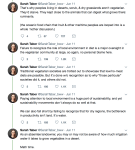
Traditional vegetarian societies are
trotted out to showcase that low/no meat diets are possible. But it’s
done w/o recognition as to why ‘those particular’ societies did it,
and others did not.
Paying attention to local environment
is a huge part of sustainability, and yet sustainability movements
don’t always do so well at that.
We can also fall short by failing to
recognize that for dry regions, the bottleneck in productivity isn’t
land, it’s water.
As an absentee landowner, you may or
may not be aware of how much irrigation water it takes to grow
vegetables in a desert. Math time.
Let’s start w. cows. Best figures for
cow carrying capacity in landscape similar to Chihuahua are for dry
part of CO. Double that for Chihuahua’s longer growing season, and 10
cows would need about 73 acres to live on (wild scrub w no
irrigation.)
Cool, so we don’t have to irrigate to
feed those cows. All we have to do is give them drinking water. How
much? A cow needs about 18.5 gal/day, so 10 of them for a year would
need about 67,000 gallons.
67,000 gallons is a decent amount of
water.
Now let’s look at how much it takes to
grow vegetables on that same land.
Most plant crops need about an
acre-inch of water per week.
For the non-farmers and absentee
landlords following along, an acre-inch is just how much water it
takes to cover an acre of land 1” deep.
It’s about 27,000 gallons.
An acre of crops needs that every
single week.
Chihuahua’s got this amazing long
growing season. So let’s say a veggie, grain, soybean or other plant
protein farm in Chihuahua’s got crops in the ground 40 weeks out of
the year.
73 acres x 40 weeks x 27,000
gallons/week = 79 MILLION gallons of water.
That’s a thousand times more water.
It takes a thousand times more water to
grow an acre of crops for human consumption, than it takes to grow an
acre of cow on wild range.
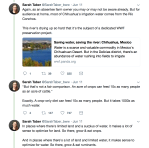
Again, as an absentee farm owner you
may or may not be aware already. But for audience at home, most of
Chihuahua’s irrigation water comes from the Rio Conchos.
The river’s drying up so hard that it’s
the subject of a dedicated WWF preservation project.
“But that’s not a fair comparison. An
acre of crops can feed 10x as many people as an acre of cattle.”
Exactly. A crop-only diet can feed 10x
as many people. But it takes 1000x as much water.
In places where there’s limited land
and a surplus of water, it makes a lot of sense to optimize for land,
so there, grow & eat crops.
And in places where there’s a lot of
land and limited water, it makes sense to optimize for water, So
there, grow & eat ruminants.
It’s really interesting to me that the
conversation around vegetarianism & the environment is so
strongly centered on assumptions that every place in the world is on
the limited land/surplus plan.
You know what region that describes
really well? Northwestern Europe.
In many ways, viewing low/no meat diets
as the One True Sustainable Way is very much a vestige of
colonialism. It found a farmway that works really well in NW Europe,
assumed it must be universal, and tries to apply it to places where
it absolutely does not pencil out.
What a nice accessible description of a very important perspective! Now obviously not all of it can apply to every biome or social niche (a key problem with factory farming is the emphasis on forcibly terraforming land to suit the needs of cows – this is, among other things, lethal to the local ecology) but such a vividly painted picture of the nuance of food networks and the relationships between humans and our ecology. The reason I think it’s important to reblog it is that it begins to introduce people to that nuance, that concept of a complex ecology that we still belong to, in which current trends and moral judgments are …. barely a scratch on the surface, the equivalent of buying a different flavour of potato chips.
That’s basically it, the current discourse we have around food is at the level of what flavour of potato chips is Best For The World (And Grants Me The Most Imaginary Performance Points When I Purchase It) and we get people fighting over what colour packet they think everyone else should buy. But they’re all the same Walkers brand potato chips in the same bag, they just have different levels of artificial flavouring and slightly different colours on the front. We ought to raise each other up to the level of interrogating potato chips, asking why we are consuming a single brand, teaching each other to make our own, learning about different relationships other people can have with chips, seeking and supporting other brands, learning about other ways to use potatoes, pressuring the big producers to make better global choices. forcibly changing the fashion so that the disposable crinkly packets become passé and unmarketable, and everyone insists on having them packaged in sustainable recyclable paper. That’s the difference between the discourse we have and the discourse we could be having.
I would love to see us bringing this depth and nuance to all of our discussions about food.
Repeat after me: – Veganism is not affordable – Veganism is not cruelty free – Veganism is not the best choice for everyone
Repeat after me -I’m an idiot and wrong. -Veganism can be made affordable. –Veganism is fucking cruelty free. That’s what it’s all about. – Veganism is the best choice for everyone, if everyone did it. -I’m a fucking asshole for making this completely wrong text post and should shut the hell up now.
People are literally starving in South America because all the Quinoa crop is being exported mainly for white vegans who want to live “cruelty-free” but don’t care about brown people as much as they do about animals.
plus, 4 of the 8 most common food allergies (soy, wheat, peanuts, and tree nuts) are common vegan substitutes.
o shit
i would literally starve to death if i couldn’t eat cheese or meats because my body cannot process nuts as they are too rough on my intestines and cause inflammation
Plus there are vegan articles floating around decrying the use of honey, even though the production and harvest of honey by responsible beekeepers doesn’t hurt the bees at all and is not exploitative, and that misinformation hurts the honey industry, which is TRYING TO SAVE BEES FROM EXTINCTION.
!
Seeing as many vegans don’t think (or don’t care) about the human cruelty aspects of veganism, I’ll add that many animals are killed and habitats destroyed to produce arable crops. Rabbits are regularly shot and killed to protect crops. If a farmer has a particularly bad rabbit problem i.e. a large, established warren, they may use a gas bomb like the Rodenator to destroy the warren and kill or relocate the rabbits. Also works well to kill rats and moles. Harvesting crops kills or destroys the homes of many small animals like mice. Even organic farming uses pesticides to kill insects. Poison is used to protect stored food such as grains from rats and mice. Pest control is essential for food production. Without it farmers worldwide simply would not be able to meet the demand for food.
It is literally impossible to live cruelty free in modern western society. Animals have been used as resources, exterminated as pests, and harmed indirectly by humans for millenia. Humans have exploited each other probably since before we were recognisable as humans. There’s also the environmental footprint of producing and importing food.
All we can do is reduce harm. Being vegan does not mean you are living a cruelty free life.





 lav3nderwolftumblr
You must be logged in to post a comment.