Collections that Leave You Breathless—> Suneet Varma | India Bridal Fashion Week | 2013 The Golden Bracelet
Tag: longpost
pieissupernatural:
MY WRITING MASTERPOST
I just have a lot of writing tips and masterposts and just stuff in my likes and I decided to put them all into this. All rights goes to the people who made them.
Cool Other Masterposts:
- Writing Specific Characters
- Writing References
- Writing Masterpost
- Character Guides
- Writing Help for Writers
- Ultimate Writing Resource List
- Lots of RP Guides
- Online Writing Resources
- List of Websites to Help You Focus
- Resources for Writing Bio’s
- Helpful Links for Writing Help
- General Writing Resources
- Resources for Biography Writing
- Mental Ilnesses/Disorders Guides
- 8 Words You Should Avoid While Writing
- The Ultimate Writing Masterpost
General:
- The Official Ten-Step Guide to Becoming the Next Gatsby
- The Periodic Table of Storytelling
- Joss Whedon’s Top 10 Writing Tips
- Getting Out of Your Comfort Zone
- 34 Writing Tips that will make you a Better Writer
- 50 Free resources that will improve your writing skills
- 5 ways to get out of the comfort zone and become a stronger writer
- 10 ways to avoid Writing Insecurity
- The Writer’s Guide to Overcoming Insecurity
- The Difference Between Good Writers and Bad Writers
- You’re Not Hemingway – Developing Your Own Style
- 7 Ways to use Brain Science to Hook Readers and Reel them In
- 8 Short Story Tips from Kurt Vonnegut
- How to Show, Not Tell
- 5 Essential Story Ingredients
- How to Write Fiction that grabs your readers from page one
- Why research is important in writing
- Make Your Reader Root for Your Main Character
- Writing Ergonomics (Staying Comfortable Whilst Writing)
- The Importance of Body Language
- Fashion Terminology
- All About Kissing
- Genre Help: Romance
- 187 Mental Illnesses
- Types of Mental Illness
- Eye Color List
- Spectral Groupings
- Do you have trouble creating your titles?
- On being a co-writer || Additional tips on effective co-writing
- The length of a chapter
- How to deal with too many story ideas
- On writing two stories simultaneously || a similar ask
- When a story stops working
- Copyright
- Reading critically for writers
- The question of outlining
- Avoiding publishing scams
- Finding story ideas
- Tips on building a platform [guest blog]
- How much does writing “in genre” matter?
- What a “real writer” is
- Pennames and aliases
- A series of thoughts on series titles
- The self-pub miniseries: the why
- The self-pub miniseries: the what
- Rewriting fanfiction into original fiction
- Formatting long quotes and songs
Characters:
- 10 days of Character Building
- Name Generators
- Name Playground
- Universal Mary Sue Litmus Test
- Seven Common Character Types
- Handling a Cast of Thousands Part 1 – Getting To Know Your Characters
- Web Resources for Developing Characters
- Building Fictional Characters
- Fiction Writer’s Character Chart
- Body Language Cheat
- Body Language Reference Cheat
- Tips for Writers: Body Language
- Types of Crying
- Body Language: Mirroring
- Character Building Workshop
- Tips for Characterization
- Character Chart for Fiction Writers
- Villains are people too but…
- How to Write a Character Bible
- Character Development Exercises
- All Your Characters Talk the Same – And They’re Not A Hivemind!
- Medieval Names Archive
- Sympathy Without Saintliness
- Family Echo (Family Tree Maker)
- Behind The Name
- 100 Character Development Questions for Writers
- Aether’s Character Development Worksheet
- The 12 Common Archetypes
- Six Types of Courageous Characters
- Kazza’s List of Character Secrets – Part 1, Part 2
- Creating Believable Characters With Personality
- Angry
- Bad Asses
- Bitches (2, 3, 4, 5, 6, 7)
- Childishness
- Emotional Detachment
- Flirtatious
- The Girl Next Door
- Introverts (2)
- Mean Persons (2)
- Psychopaths
- Party Girls
- Rich (2)
- Rebels
- Sarcasm
- Serial Killers (2)
- Shyness (2, 3)
- Sluts
- Villains (2)
- Witt
- Body Language Cheat Sheet
- Creating Fictional Characters Series
- Three Ways to Avoid Lazy Character Description
- 7 Rules for Picking Names for Fictional Characters
- Character Development Questionnaire
- How to Create Fictional Characters
- Character Name Resources
- Character Development Template
- Character Development Through Hobbies
- Character Flaws List
- 10 Questions for Creating Believable Characters
- Ari’s Archetype Series
- How to Craft Compelling Characters
- List of 200 Character Traits
- Writing Characters of the Opposite Sex
- Making Your Characters Likable
- Do you really know your characters?
- Character Development: Virtues
- Character Development: Vices
- Character Morality Alignment
- List of Negative Personality Traits
- List of Positive Personality Traits
- List of Emotions – Positive
- List of Emotions – Negative
- Loon’s Character Development Series – Part 1, Part 2, Part 3, Part 4
- Phobia List A-L (Part 1), M-Z (Part 2)
- 30 Day In Depth Character Development Meme
- Words for Emotions based on Severity
- Eight Bad Characters
- High Level Description of the Sixteen Personality Types
- How Not to Write Female Characters
- Writing Female Characters
- How to write empowering female characters
- Why I write strong female characters
- Red Flags for Female Characters Written by Men
- Writing strong female characters
- The Female Character Flowchart
- Eight Heroine Archetypes
- Eight Hero Archetypes
- Help on picking character names
- A tip about realistic characters
- Strategies to create believable characters
- Additional tips on writing PoC characters
- Advice on writing genders
- Creating unstable characters
- Ambiguous Antagonists
- A tidbit on psychological trauma [trigger warnings]
- On writing accents
- What makes characters stick with me
- Sweetening up character description
- Making an introverted character stand out
- Conveying too much or too little character “inner reflection”
- Revealing a character’s asexual orientation
- Revealing a character’s gender & orientation
- A habit of killing characters
- When characters aren’t standing out
- Breaking hearts with character deaths
- Quick tips on expressing character
- Character development versus pacing
- A mini guide to character voice
- A Description Resource
- 55 Words to Describe Someones Voice
- Describing Skin Colors
- Describing a Person: Adding Details
- Emotions Vocabulary
- 90 Words For ‘Looks’
- Be More Descriptive
- Describe a Character’s Look Well
- 100 Words for Facial Expressions
- To Show and Not To Tell
- Words to Describe Facial Expressions
- Describing Clothes
- List of Actions
- Tone, Feelings and Emotions
- Writing A Vampire
- Writing Pansexual Characters
- Writing Characters on the Police Force
- Writing Drunk Characters
- Writing A Manipulative Character
- Writing A Friends With Benefits Relationship
- Writing A Natural Born Leader
- Writing A Flirtatious Character
- Writing A Nice Character
- Fiction Writing Exercises for Creating Villains
- Five Traits to Contribute to an Epic Villain
- Writing Villains that Rock
- Writing British Characters
- How To Write A Character With A Baby
- On Assassin Characters
- Disorders in general (2, 3, 4, 5)
- Attention Deficit Disorder
- Antisocial Personality Disorder
- Anxiety (2, 3, 4, 5)
- Avoidant Personality Disorder
- Alice In Wonderland Syndrome
- Bipolar Disorder (2, 3)
- Cotard Delusions
- Depression (2, 3, 4, 5, 6)
- Eeating Disorders (2, 3)
- Facitious Disorders
- Histrionic Personality Disorder
- Multiple Personality Disorder (2)
- Narcissistic Personality Disorder
- Night Terrors
- Kleptomania (2)
- A Pyromaniac
- Posttraumatic Stress Disorder
- Psychopaths
- Obsessive Compulsive Disorder (2) (3)
- Sex Addiction (2)
- Schizophrenia (2)
- Sociopaths (2)
- Aspergers Syndrome
- Apathy
- Autism
- Someone Blind (2)
- Cancer (2, 3)
- Disability
- Dyslexia
- Muteness (2, 3)
- Stutter
- Actors
- Ballet Dancer (2)
- Christianity
- Foreigners
- Gamblers
- Hinduism
- Hitmen
- Satanism
- Smokers
- Stoners
- Taoism
- Journalists
- Vegetarians
- Alcohol Influence (2, 3, 4, 5)
- Cocaine Influence
- Ecstasy Influence (2)
- Heroin Use
- LSD Influence
- Marijuana Influence (2, 3)
- Opiate Use
Tips on Writing Dialogue:
- It’s Not What They Say…
- Top 8 Tips for Writing Dialogue
- Speaking of Dialogue
- The Great Said Debate
- He Said, She Said, Who Said What?
- How to Write Dialogue Unique to Your Characters
- Writing Dialogue: Go for Realistic, Not Real-Life
Tips on Writing Point of View:
- Establishing The Right Point of View
- How to Start Writing in the Third Person
- The I Problem
Style & Craft of Writing:
- The literary “weak verb”
- Do you have word tics?
- Victoria’s Vitamins: vague descriptive words
- Victoria’s Vitamins: mood
- Breaking writing habits
- Varying sentences
- Describing colors
- Sweetening up character description
- Purple prose
- Grammar is a tricksy thing
- “Smartening” the language of your narrative
- Building suspense and making readers sweat
- A couple tips about description in fast-paced scenes
Content:
- The story of exposition
- 10 ways to hit your reader in the gut
- Make your reader root for your main character
- Make your reader hold their breath
- What’s the big deal about intros?
- A tip about description
- The word count of your manuscript
- Things that make me keep reading
- Choosing ideas and endings
- When to describe setting
- Battling cliches
- Is your story YA, NA, or adult?
- When a plot isn’t strong enough to make a whole story
- Flashbacks with multiple POVs
- Bulking up your word count
- Avoiding cliches
- Conquer that opening line || response || discussion
- Tips on revealing setting awesomely kind of
- Deciding between different ideas for the same story
Revision:
- You’ve finished your manuscript! Now what?
- Revision sucks but doesn’t have to suck
- Where to find beta readers/critique partners
- Tips on taking critique
- Tips on giving critique
- What to do with bad writing advice
- Additional insight on bad writing advice
- Five quick steps to get into revising that manuscript
- When to say you’re done revising
- Beginning the awesome journey of revision
- Friends are not always the best readers
Plot, Structure, & Outline:
- Writing A Novel Using the Snowflake Method
- Effectively Outlining Your Novel
- Conflict and Character Within Story Structure
- Outlining Your Plot
- Ideas, Plots and Using the Premise Sheets
- How To Write A Novel
- Creating Conflict and Sustaining Suspense
- Plunge Right In…Into Your Story, That Is
- Tips for Creating a Compelling Plot
- 36 (plus one) Dramatic Situations
- The Evil Overlord Devises A Plot: Excerpt from Stupid Plot Tricks
- Conflict Test
- What is Conflict?
- Monomyth
- The Hero’s Journey: Summary of Steps
- Outline Your Novel in Thirty Minutes
- Plotting Without Fears
- Novel Outlining 101
- Writing The Perfect Scene
- One-Page Plotting
- The Great Swampy Middle
- How Can You Know What Belongs In Your Book?
- Create A Plot Outline in 8 Easy Steps
- How to Organize and Develop Ideas for Your Novel
- Create Structure in your novel using index cards
- Choosing the best outline method for you
- Hatch’s Plot Bank
Setting & Making Your Own World
- Magical Word Builder’s Guide
- I Love The End Of The World
- World Building 101
- The Art of Description: Eight Tips to Help Bring Your Settings to Life
- Creating the Perfect Setting – Part 1
- Creating a Believable World
- Setting
- Character and Setting Interactions
- Maps Workshop – Developing the Fictional World Through Mapping
- World Builders Project
- How To Create Fantasy Worlds
- Creating Fantasy and Science Fiction Worlds
Helpful Tools & Software:
- Tip Of My Tongue – Find the word you’re looking for
- Write or Die – Stay motivated
- Stay Focused – Tool for Chrome, lock yourself out of distracting websites
- My Writing Nook – Online Text Editor, Free
- Bubbl.us – Online Mind Map Application, Free
- Family Echo – Online Family Tree Maker, Free
- Freemind – Mind Map Application; Free; Windows, Mac, Linux, Portable
- Xmind – Mind Map Application; Free; Windows, Mac, Linux, Portable
- Liquid Story Binder – Novel Organization and Writing Application; free trial, $45.95; Windows, Portable
- Scrivener – Novel Organization and Writing Application; free trial, $39.95; Mac
- SuperNotecard – Novel Organization and Writing Application; free trial, $29; Windows, Mac, Linux, portable
- yWriter – Novel Organization and Writing Application; free; Windows, Linux, portable
- JDarkRoom – Minimalist Text Editing Application; free; Windows, Mac, Linux, portable
- AutoRealm – Map Creation Application; free; Windows, Linux with Wine
Grammer & Revision:
- How To Rewrite
- Editing Recipe
- Cliche Finder
- Revising Your Novel: Read What You’ve Written
- Writing 101: Revising A Novel
- 20 Common Grammar Mistakes That (Almost) Everyone Makes
- Synonyms for the Most Commonly Used Words of the English Language
- Grammar Urban Legends
- Words Instead of Walk (2)
- Commonly Confused Adjectives
- A Guide on Punctuation
- Common Writing Mistakes
- 25 Synoms for ‘Expession’
- How to: Avoid Misusing Variations of Words
- Words to Keep Inside Your Pocket
- The 13 Trickiest Grammar Hang-Ups
- Other Ways to Say..
- Proofreading
- 300+ Sophiscated and Underused Words
- List of Misused Words
- Words for Sex
- 100 Beautiful and Ugly Words
- Words to Use More Often
- Alternatives for ‘Smile’ or ‘Laugh’
- Three Self Editing Tips
- Words to Use Instead of ‘Walk’, ‘Said’, ‘Happy’ and ‘Sad’
- Synonyms for Common Words
- Alternatives for ‘Smile’
- Transitional Words
- The Many Faces and Meanings of ‘Said’
- Synonyms for ‘Wrote’
- A Case Of She Said, She Said
Creativity Boosters:
- *Creative Writing Prompts
- *Ink Provoking
- *Story Starter
- *Story Spinner
- *Story Kitchen
- *Language is a Virus
- *The Dabbling Mum
- Quick Story Idea Generator
- Solve Your Problems By Simply Saying Them Out Loud
- Busting Your Writing Rut
- Creative Acceleration: 11 Tips To Engineer A Productive Flow
- Writing Inspiration, Or Sex on a Bicycle
- The Seven Major Beginner Mistakes
- Complete Your First Book with these 9 Simple Writing Habits
- Free Association, Active Imagination, Twilight Imaging
- Random Book Title Generator
- Finishing Your Novel
- Story Starters & Idea Generators
- Words to Use More Often
- How to: Cure Writer’s Block
- Some Tips on Writer’s Block
- Got Writer’s Block?
- 6 Ways to Beat Writer’s Block
- Tips for Dealing With Writer’s Block
Improvement:
- Improve Your Writing Habits Now
- 5 Ways to Add Sparkle to Your Writing
- Getting Over Roleplaying Insecurities
- Improve Your Paras
- Why the Right Word Choices Result in Better Writing
- 4 Ways To Have Confidence in Your Writing
- Writing Better Than You Normally Do
- How’s My Driving?
Motivation:
- Backhanding procrastination
- On habits and taking care of yourself || Response
- More troubles with writing motivation
- The inner critic and ways to fight it
- The writing life is hard on us
- For troubles with starting your story
- Writing to be published
- “You’re a writer, will you write this for me?”
- Writing a story that’s doomed to suck
- Writing stamina builds slowly
- When depression goes and writing goes with it
- Additional inner critic strategies
- Tips on conquering NaNoWriMo (or any project, really)
- You will change as a writer
- Ways to keep writing while in school
- 13 quick tips when you’re starting your novel
- First draft blues
- Getting in your own way
Writing an Application:
- How to: Make That Application Your Bitch
- How to: Make Your App Better
- How to: Submit a Flawless Audition
- 10 Tips for Applying
- Para Sample Ideas
- 5 Tips on Writing an IC Para Sample
- Writing an IC Sample Without Escaping From the Bio
- How to: Create a Worthy IC Para Sample
- How to: Write an Impressive Para Sample
- How to: Lengthen Short Para’s
Prompts:
- Drabble Stuff
- Prompts List
- Writing Prompts
- Drabble Prompts
- How to Get Into Character
- Writing Challenges/Prompts
- A Study in Writing Prompts for RPs
- Para Prompts & Ideas
- Writing Prompts for Journal Entries
- A List of Para Starters
“Pixar’s 22 Rules to Phenomenal Storytelling” by Emma Coats, storyboard artist for Pixar. Infographic by PBJ Publishing. (x)
I understand that a lot of people enjoy writing shipfics where they transplant characters into a college setting. Since some writers may not be in college, or may have graduated a long time ago, I thought I’d offer a helpful list of realistic college meet not-so-cute scenarios. Forget baristas. This is where it’s at.
– I’m really passionate about this cause and I will give you this flier if I have to shove it down your throat
– vicious battle over the only left handed desk in the room
– my roommate’s boyfriend is staying over so can I please sleep on your floor
– it’s pouring and my final paper is in my backpack so I guess we’re stuck under this tiny awning together. do you think they’d deliver pizza here
– hey I have to photograph someone for class will you be my model
– hey I have to take someone’s blood pressure for class will you be my victim
– variations of the above
– I know I keep coming to the cookie shop and for some reason it’s always your shift but don’t you dare judge me I need these for my sanity
– all our friends are drunk
– it’s 3 am and I’m still in the library studying for finals and I’m losing my grip on reality and I think I just saw a ghost
– we’re the only two people in this club. what is this club even for
– humans vs zombies (see you can still have your zombie AU, best of both worlds)
– we’re the only people who ever talk in discussions it’s awful
– GROUP PROJECT
#both of us turned up at the wrong room for this lecture but don’t know where its meant to be #waiting outside for pizza to be delivered and both of ours are super late #you keep parking in the space outside my student house you absolute asshole #we live in halls opposite each other and I keep seeing you changing through your window #you’re the only other person in the room when I break the printer and I’m panicking (little-smartass)
– Neither of us bought the expensive textbook but there is only one copy in the library and it can’t leave the building
– This awesome professor only has one TA slot and we’re rivals
– I found your USB drive still in the computer
– I thought I was the only one who liked the waffle station in the cafeteria
– You keep reserving the good study room in the corner of the library with the windows
– We’re studying in the library and there are two people very obviously fucking in the stacks and we keep sharing embarrassed glances
– We’re both donating blood in the blood donation van in the quad to get out of the same class
– You decked me in the head while you were playing frisbee golf
– Wait, I actually have a competent lab partner?
– You’re the RA and you’re trying to bust me for having hermit crabs
– You’re baking cookies in the communal kitchen at 3am and I’m angry but also really hungry
– What are you doing at this table at the career fair
– Waiting for office hours
– I’ve been sitting in this seat all semester why did you decide to sit in it today
– Clearly we’re both really uncomfortable at this party
– You peed on my car. You were drunk. I was in the car. There will be hell to pay.
– We started racing up the three flights of stairs to class for some reason and we can’t stop
– You’re REALLY GOOD at using the right search terms for the academic databases and I’m on a deadline
-my friend dragged me to this party and I just saw my ex quick make out with me
-we’re always at the fitness center at the same time and end up competing on the treadmill
– Sorry my roommate puked on your shoes
– Can I borrow a dryer sheet? I ran out and the ones in the vending machine give me a rash
-Your school mailbox is right next to mine
-I saw you sneaking captain crunch and cutlery out of the dining hall
-My roommate borrowed your contraband hotpot and managed to set it on fire
-You keep using my preferred shower stall in the floor bathrooms when I’m trying to get ready for class
-My computer crashed and you’re the student worker at the IT center
-we’re both on althetic teams that aren’t as cool as the football team and they give us shit
– You’re part of the guerrilla theater club on campus and crashed my class for a performance
-What do you mean we’re under a tornado warning?
If you would like to request a tutorial, you can do so on this post over here!
Eye Coloring Tutorial by me | Other Eye Tutorials: 1 2 3 | My Resource list for Faces and Heads
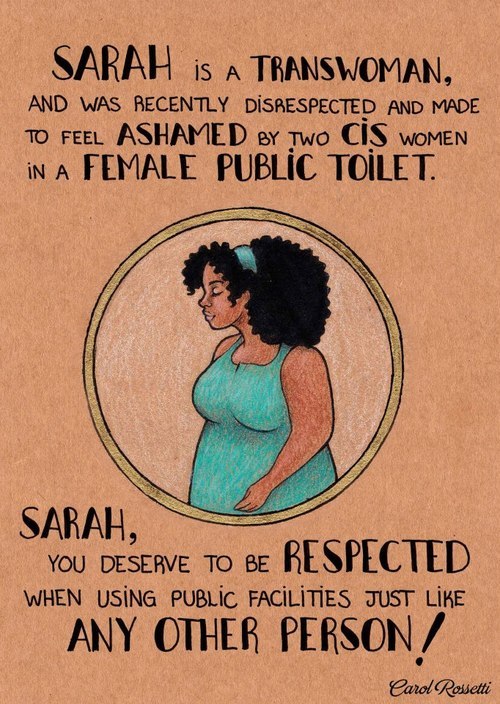
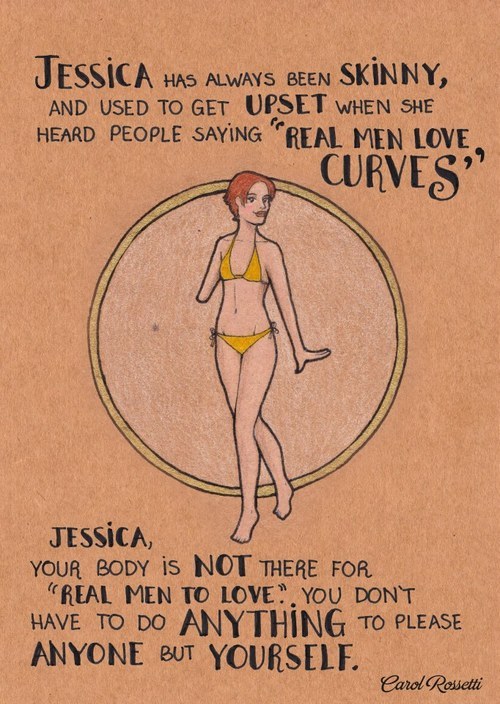
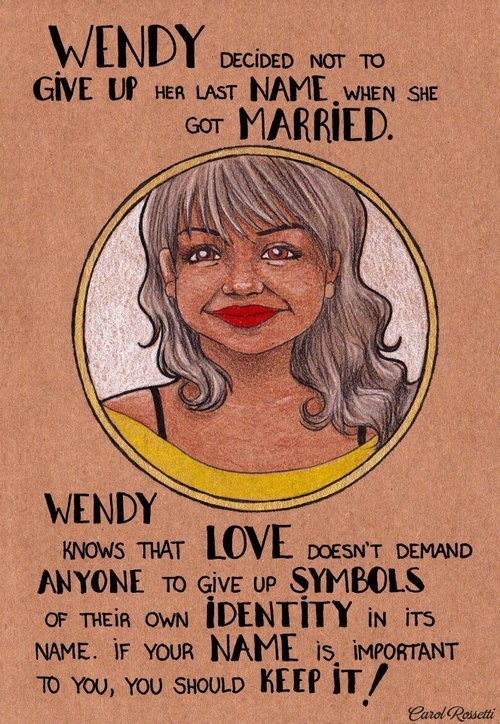
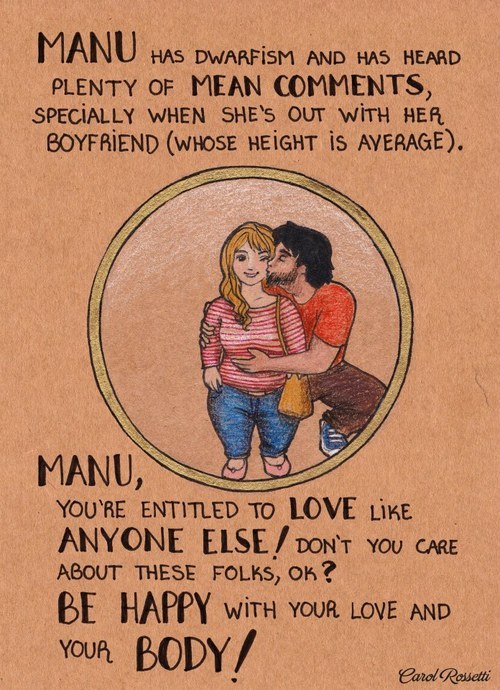
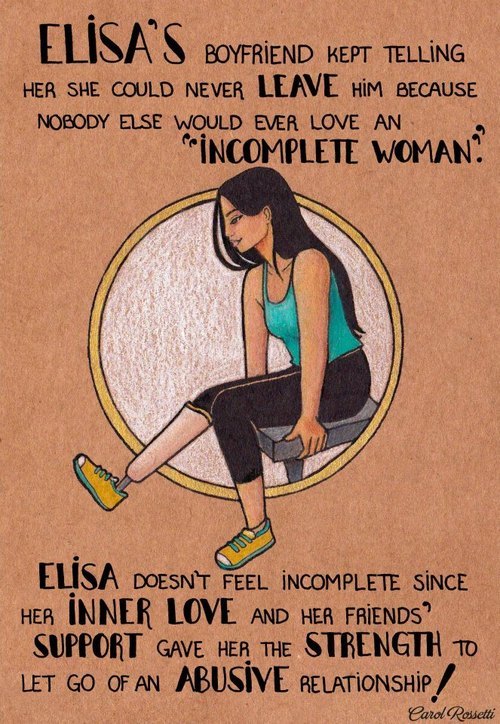
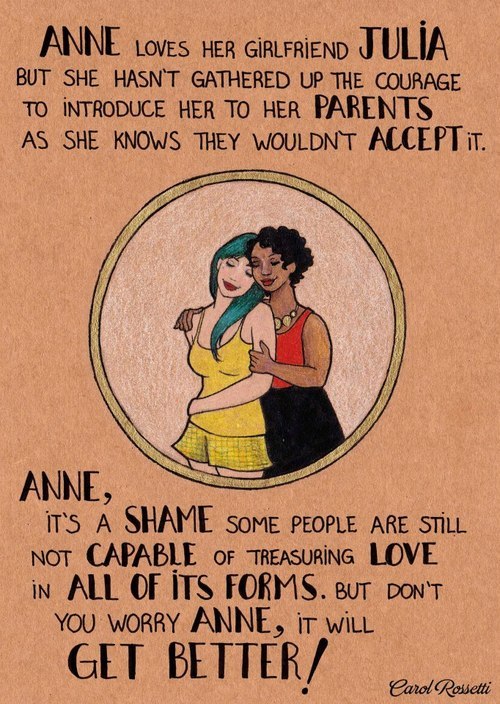
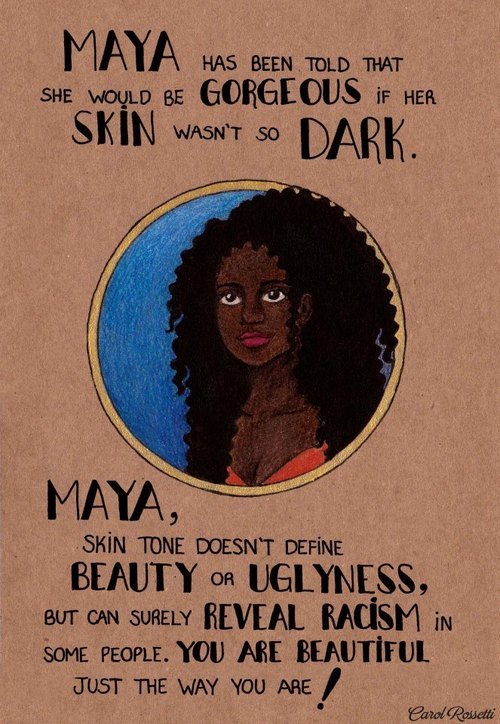
“Image Credit: Carol Rossetti
When Brazilian graphic designer Carol Rossetti began posting colorful illustrations of women and their stories to Facebook, she had no idea how popular they would become.
Thousands of shares throughout the world later, the appeal of Rosetti’s work is clear. Much like the street art phenomenon Stop Telling Women To Smile, Rossetti’s empowering images are the kind you want to post on every street corner, as both a reminder and affirmation of women’s bodily autonomy.
"It has always bothered me, the world’s attempts to control women’s bodies, behavior and identities,” Rossetti told Mic via email. “It’s a kind of oppression so deeply entangled in our culture that most people don’t even see it’s there, and how cruel it can be.”
Rossetti’s illustrations touch upon an impressive range of intersectional topics, including LGBTQ identity, body image, ageism, racism, sexism and ableism. Some characters are based on the experiences of friends or her own life, while others draw inspiration from the stories many women have shared across the Internet.
“I see those situations I portray every day,” she wrote. “I lived some of them myself.”
Despite quickly garnering thousands of enthusiastic comments and shares on Facebook, the project started as something personal — so personal, in fact, that Rossetti is still figuring out what to call it. For now, the images reside in albums simply titled “WOMEN in english!“ or ”Mujeres en español!“ which is fitting: Rossetti’s illustrations encompass a vast set of experiences that together create a powerful picture of both women’s identity and oppression.
One of the most interesting aspects of the project is the way it has struck such a global chord. Rossetti originally wrote the text of the illustrations in Portuguese, and then worked with an Australian woman to translate them to English. A group of Israeli feminists also took it upon themselves to create versions of the illustrations in Hebrew. Now, more people have reached out to Rossetti through Facebook and offered to translate her work into even more languages. Next on the docket? Spanish, Russian, German and Lithuanian.
It’s an inspiring show of global solidarity, but the message of Rossetti’s art is clear in any language. Above all, her images celebrate being true to oneself, respecting others and questioning what society tells us is acceptable or beautiful.
"I can’t change the world by myself,” Rossetti said. “But I’d love to know that my work made people review their privileges and be more open to understanding and respecting one another.””
From the site: All images courtesy Carol Rossetti and used with permission. You can find more illustrations, as well as more languages, on her Facebook page.
Oooh. I reblogged a partial version of this recently but I didn’t know how many more there were! I LOVE these!
OK SO THERE ARE TONS MORE OF THESE OF THE ARTISTS FB PAGE. GUYS THESE ARE AWESOME.
LOOK
AT
THESE
LETS APPLAUD CAROL ROSSETTI EVERYONE
LOOK
IT GOT BETTER



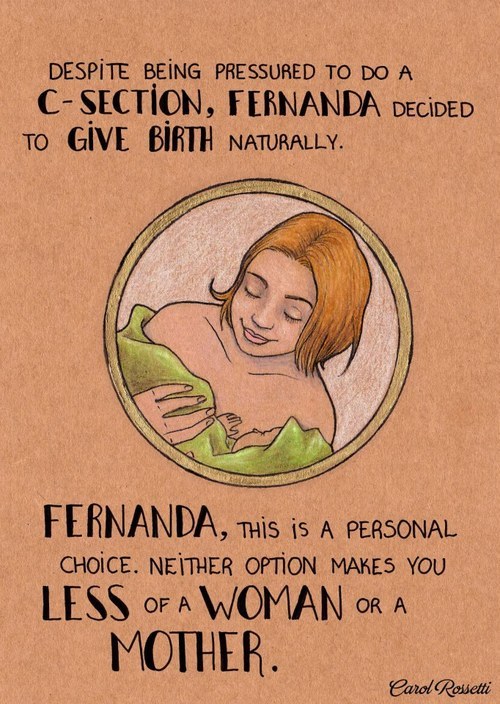


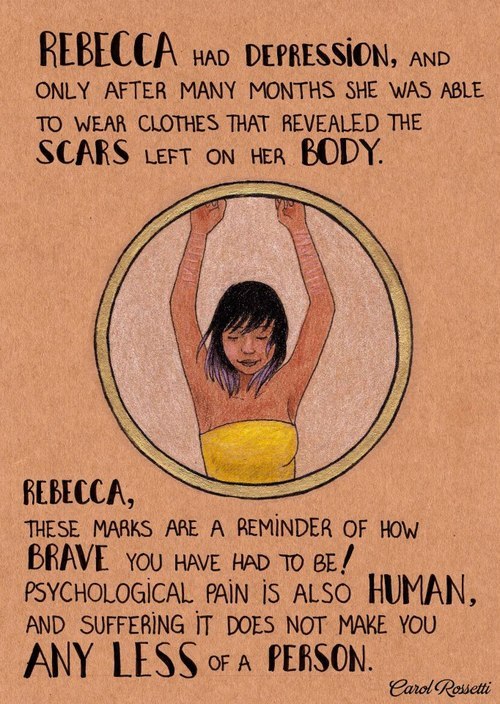


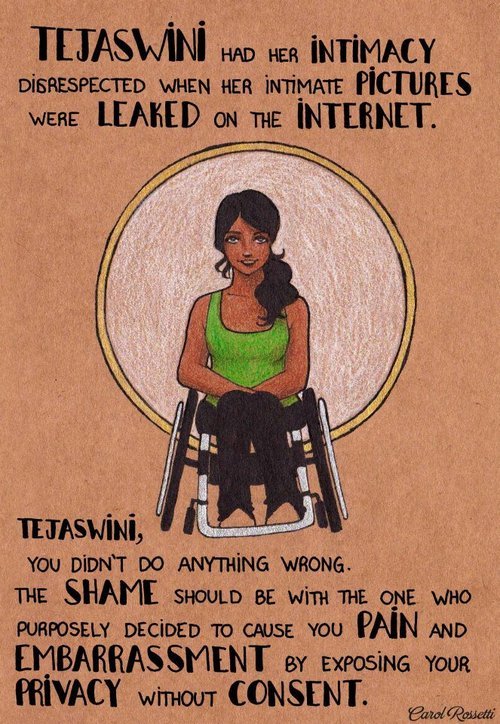


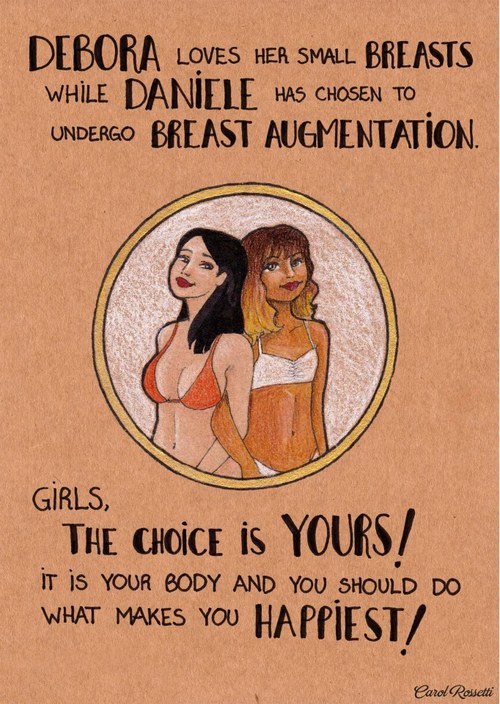



Let’s Talk About: Creating Villains
A villain (also known in film and literature as the “antagonist,” “baddie”, “bad guy”, “heavy” or “black hat”) is an “evil” character in a story, whether a historical narrative or, especially, a work of fiction. The villain usually is the antagonist (though can be the protagonist), the character who tends to have a negative effect on other characters. [x]
Villain: A cruelly malicious person who is involved in or devoted to wickedness or crime; a wicked or malevolent person; the main evil character and antagonist to the hero
—-
- Villains Who Take Over the Novel.
- Obvious Villains.
[If you’re having trouble with this, read the novels of Agatha Christie and other famous mystery writers to learn how to fool the readers while playing fairly. For an even better learning experience, try reading an Agatha Christie novel after finding out the identity of the killer. You’ll get great tips on how to conceal information right in front of the reader’s eyes.]- Clichéd Villains.
[The conniving other woman, the evil mother-in-law, the wicked twin sister. Some villains have been used so often that they have become recognizable character types. These characters still have a lot of life left in them, but only if you flesh them out.]- Villains with Unbelievable Motivations.
[Nobody wants to read an entire novel only to find out that the villain was plotting against the hero the whole time because the hero stole away his prom date 20 years ago. If your villain is scheming and planning and committing crimes, he needs a good reason to go to all this trouble.]- Unnecessary Villains.
[Powerful main characters can create plenty of conflict on their own.]- Utterly Evil Villains.
[Some villains are simply too evil. Not only does he make life miserable for the hero and heroine, he also beats and rapes the servants, kicks the dog, and on top of that, refuses to recycle. Not only is this unrealistic, it is often trite.]- Villains Who Talk Too Much.
[This one is a classic cliché. The villain captures your main characters, but instead of getting them out of the way, he goes into a spiel about how bright he is because he outwitted them all.]- Weak Villains
[Imagine this scenario. You’ve been reading an exciting, suspenseful novel, and you’re close to the end. The hero is confronting the villain. You’re expecting a big payoff. But instead, the villain turns out to be a huge wimp who caves in quickly.]—-
Writing Tips for Creating a Complex Villain
—Choose a model for your villain: an ordinary person, a celebrity, or a notorious criminal from the news; examine that person’s flaws and weaknesses. How have they wronged others? Discard their positive traits, magnify their negative traits, and write a brief character sketch. What’s the character’s name? What does he or she look like? What is going on in the character’s head that allows him or her to treat others with disregard?
—Give your villain a shady past: what terrible things has your villain done throughout his or her life? What terrible things were done to him or her? Some villains are just trouble makers; others are deranged psychopaths. How extreme is your villain?
—Identify the source: what happened to your villain to turn him or her so evil? Was your villain born that way?
—The most interesting villains are not completely evil. They have a soft spot for puppies or they write cheesy love poems. Contrary personality traits add depth and realism to all characters. Describe your villain’s positive traits.—Put your villain in a scene: make sure you include dialogue so you can work out how the character speaks. Give your villain a distinct voice. Is your villain disguised as a benevolent character? Does he or she spend every waking minute committing evil deeds?
—
Real Life Inspirations Behind Some of the Best Comic Book Villains
Creating Villains People Love to Hate
Everybody Lies
What Makes Serial Killers Tick?
The Making of a Serial Killer
The Greatest Female Villains
Female Villains: 10 Evil Women In Literature
Basic Tips To Write Better & More Despicable Villains
Seven Tips on Creating a Fantastic Fantasy Villain—-
A good villain must be ACTIVE:
Writers often complain that they have trouble making the middle of their novel exciting. A villain who acts, instead of simply sitting around thinking evil thoughts, is the best possible cure for a sagging middle-book.A good villain must be SMART.
When the author has the villain do something stupid so the hero can defeat him, it not only makes the villain look stupid, it makes the hero look weak.A good villain must be SENSIBLY MOTIVATED, AND NO WORSE THAN HE HAS TO BE TO ACHIEVE HIS GOAL.
A credible villain can be motivated by anything from simple greed to self-preservation, from patriotism to revenge, from religious fervor to ambition to romantic love. In short, anything that can motivate any normal person can also motive your villain.[x]
—-
A great literary villain is not any one thing; some are moustache-twirlers or evil geniuses, some are darkly complex, tortured souls, while others are amoral crazies who act wholly on impulse. There are many ways to write a literary villain, but a unique characteristic often binds the truly memorable anti-heroes together: they are at least as complex as the heroes. [x]
60 Awesome Search Engines for Serious Writers
Finding the information you need as a writer shouldn’t be a chore. Luckily, there are plenty of search engines out there that are designed to help you at any stage of the process, from coming up with great ideas to finding a publisher to get your work into print. Both writers still in college and those on their way to professional success will appreciate this list of useful search applications that are great from making writing a little easier and more efficient.
Professional
Find other writers, publishers and ways to market your work through these searchable databases and search engines.
- Litscene: Use this search engine to search through thousands of writers and literary projects, and add your own as well.
- Thinkers.net: Get a boost in your creativity with some assistance from this site.
- PoeWar: Whether you need help with your career or your writing, this site is full of great searchable articles.
- Publisher’s Catalogues: Try out this site to search through the catalogs and names of thousands of publishers.
- Edit Red: Through this site you can showcase your own work and search through work by others, as well as find helpful FAQ’s on writing.
- Writersdock: Search through this site for help with your writing, find jobs and join other writers in discussions.
- PoetrySoup: If you want to find some inspirational poetry, this site is a great resource.
- Booksie.com: Here, you can search through a wide range of self-published books.
- One Stop Write Shop: Use this tool to search through the writings of hundreds of other amateur writers.
- Writer’s Cafe: Check out this online writer’s forum to find and share creative works.
- Literary Marketplace: Need to know something about the publishing industry? Use this search tool to find the information you need now.
Writing
These helpful tools will help you along in the writing process.
- WriteSearch: This search engine focuses exclusively on sites devoted to reading and writing to deliver its results.
- The Burry Man Writers Center: Find a wealth of writing resources on this searchable site.
- Writing.com: This fully-featured site makes it possible to find information both fun and serious about the craft of writing.
- Purdue OWL: Need a little instruction on your writing? This tool from Purdue University in Lafayette, IN can help.
- Writing Forums: Search through these writing forums to find answers to your writing issues.
Research
Try out these tools to get your writing research done in a snap.
- Google Scholar: With this specialized search engine from Google, you’ll only get reliable, academic results for your searches.
- WorldCat: If you need a book from the library, try out this tool. It’ll search and find the closest location.
- Scirus: Find great scientific articles and publications through this search engine.
- OpenLibrary: If you don’t have time to run to a brick-and-mortar library, this online tool can still help you find books you can use.
- Online Journals Search Engine: Try out this search engine to find free online journal articles.
- All Academic: This search engine focuses on returning highly academic, reliable resources.
- LOC Ask a Librarian: Search through the questions on this site to find helpful answers about the holdings at the Library of Congress.
- Encylcopedia.com: This search engine can help you find basic encyclopedia articles.
- Clusty: If you’re searching for a topic to write on, this search engine with clustered results can help get your creative juices flowing.
- Intute: Here you’ll find a British search engine that delivers carefully chosen results from academia.
- AllExperts: Have a question? Ask the experts on this site or search through the existing answers.
Reference
Need to look up a quote or a fact? These search tools make it simple.
- Writer’s Web Search Engine: This search engine is a great place to find reference information on how to write well.
- Bloomsbury Magazine Research Centre: You’ll find numerous resources on publications, authors and more through this search engine.
- Merriam-Webster Dictionary and Thesaurus: Make sure you’re using words correctly and can come up with alternatives with the help of this tool.
- References.net: Find all the reference material you could ever need through this search engine.
- Quotes.net: If you need a quote, try searching for one by topic or by author on this site.
- Literary Encyclopedia: Look up any famous book or author in this search tool.
- Acronym Finder: Not sure what a particular acronym means? Look it up here.
- Bartleby: Through Bartleby, you can find a wide range of quotes from famous thinkers, writers and celebrities.
- Wikipedia.com: Just about anything and everything you could want to look up is found on this site.
- Stanford Encyclopedia of Philosophy: Find all the great philosophers you could want to reference in this online tool.
Niche Writers
If you’re focusing on writing in a particular niche, these tools can be a big help.
- PubGene: Those working in sci-fi or medical writing will appreciate this database of genes, biological terms and organisms.
- GoPubMd: You’ll find all kinds of science and medical search results here.
- Jayde: Looking for a business? Try out this search tool.
- Zibb: No matter what kind of business you need to find out more about, this tool will find the information.
- TechWeb: Do a little tech research using this news site and search engine.
- Google Trends: Try out this tool to find out what people are talking about.
- Godchecker: Doing a little work on ancient gods and goddesses? This tool can help you make sure you have your information straight.
- Healia: Find a wide range of health topics and information by using this site.
- Sci-Fi Search: Those working on sci-fi can search through relevant sites to make sure their ideas are original.
Books
Find your own work and inspirational tomes from others by using these search engines.
- Literature Classics: This search tool makes it easy to find the free and famous books you want to look through.
- InLibris: This search engine provides one of the largest directories of literary resources on the web.
- SHARP Web: Using this tool, you can search through the information on the history of reading and publishing.
- AllReaders: See what kind of reviews books you admire got with this search engine.
- BookFinder: No matter what book you’re looking for you’re bound to find it here.
- ReadPrint: Search through this site for access to thousands of free books.
- Google Book Search: Search through the content of thousands upon thousands of books here, some of which is free to use.
- Indie Store Finder: If you want to support the little guy, this tool makes it simple to find an independent bookseller in your neck of the woods.
Blogging
For web writing, these tools can be a big help.
- Technorati: This site makes it possible to search through millions of blogs for both larger topics and individual posts.
- Google Blog Search: Using this specialized Google search engine, you can search through the content of blogs all over the web.
- Domain Search: Looking for a place to start your own blog? This search tool will let you know what’s out there.
- OpinMind: Try out this blog search tool to find opinion focused blogs.
- IceRocket: Here you’ll find a real-time blog search engine so you’ll get the latest news and posts out there.
- PubSub: This search tool scours sites like Twitter and Friendfeed to find the topics people are talking about most every day.
Zodiac Expression of Nerves
♈ Aries: Hyperactivity, headaches, impulsivity, recklessness, hostility, frustration, confrontation, restlessness, rapid speech, over thinking, displays of vulnerability and need for reassurance, inability to complete minor tasks
♉ Taurus: Reservation; they will dissociate into their own worlds and be untouchable, binge eating, compulsivity (cleaning, organizing, hand washing), silence; anxiety will come in waves for Taurus and be sustained for a long period, sore throat, ‘blank’ mindedness
♊ Gemini: Giggling, restlessness, rapid speech, talkativeness, tremors, hyperactivity, distractibility, racing thoughts, insomnia, inability to stay focused on and complete even minor tasks, loud and more talkative inner monologue, chest/lung discomfort
♋ Cancer: Teariness, catastrophized thinking, imagination worst case scenarios, inability to stop distressing thoughts and inner monologue, drifting off/inability to focus, food cravings, isolation but co-current feelings of neediness and reassurance, stomach cramps and nausea
♌ Leo: Frustration, hostility, catastrophizing (imagining and living worst case scenarios) martyrdom, impulsivity, binge eating/drinking, they tend to go out of their way to help and do things for other people/keep busy in service, back pain, somatic troubles
♍ Virgo: Digestive upset, restlessness, repetitive movements (hair twirling, counting) tremor, rapid thinking, withdrawal into isolated ‘bubble’, compulsive tasks (cleaning, organizing), need to keep busy and distracted may pace back and forth
♎ Libra: Unusual quietness, increased needs for re assurance, stomach upset, restlessness, distractibility, insomnia, negative inner monologue, catastrophized imagination, repetitive hand motions, inability to explain themselves or say they are unwell
♏ Scorpio: Increased need for control, hostility, violent frustration (wall kicking, throwing objects), irrationality, increased obsessiveness – they may spend hours and hours focused on one task almost manically, rejection of others though frustration they are not ‘there’, flashbacks
♐ Sagittarius: Increased vocal volume, higher impulsivity, hostility, hyperactivity – they are liable to go out running or try to repress it physically, substance use, rapid thoughts, recklessness, giggling, distractible, back pain
♑ Capricorn: Tension, overwhelming feelings of butterflies and nerves inside especially in their stomachs although they remain composed externally. Over thinking and inability to distract themselves from worst case scenario, hostility, isolation, tendency to take on more work shifts or responsibilities
♒ Aquarius: Talkativeness, rapid speech, over thinking, restlessness, insomnia, confusion; Aquarians will feel anxious or nervous yet have little insight into why they feel this way or what is causing it, their minds and emotional responses are not connected, back pain
♓ Pisces: Teariness, catastrophized thinking, inability to distract or change thought patterns, flashbacks, hysteria, chest discomfort, digestive upset/nausea, irrationality, distressing inner monologue, substance use, increased need for assurance
STOP SCROLLING
straighten your back, mate
NOW GO ON
woah thanks i really needed that today
tumblr user demeaniac doing little favors for tumblr one post at a time
FUCK THIS POST HAS SHOWED UP LIKE 10 TIMES TODAY AND I HAVE BEEN HUNCHED OVER EVERY FUCKING TIME
PLEASE KEEP THIS GOING it is the best reminder for me ever and I always need it omg
NO NO NO NO DONT SIT UP STRAIGHT THATS ACTUALLY REALLY BAD FOR YOU
I MEAN ITS BETTER THAN HUNCHING FORWARD AND THROWING THE DISCS BETWEEN YOUR SPINE VERTEBRAE OUT OF WHACK BUT SITTING UP STRAIGHT CRUSHES THE LOWER DISCS OF YOUR BACK AND HAS BEEN SHOWN TO BE REALLY REALLY DAMAGING IN AS LITTLE AS TEN MINUTES.
YOU GOTTA TILT YOUR SEAT FORWARD SO YOUR KNEES ARE SLOPED TO ABOUT 4-6 INCHES BELOW YOUR HIPS (and then also keep your upper back straight because thats pretty important too)
And if you can’t tilt your seat forward, try reclining at about 130 degrees. This isn’t in the source article but i’ve heard it helps relive pressure on your back as a whole.
 lav3nderwolftumblr
You must be logged in to post a comment.