Here’s what you’ll need to know!
Learn all about the wonders of the human body and add scientifically-accurate drama to your stories.
MALNOURISHMENT
DEATH: average – 21 days (3 weeks), max ever recorded – 70 days (2.3 months)
6 HOURS: grouchiness and hunger due to lack of glucose.
24 HOURS – 48 HOURS: hunger very apparent; pains in stomach; body has entered ketosis and is using fatty acids as energy.
72 HOURS+: muscles begin to get broken down for energy.
You will become: increasingly depressed, irritable, hysteric apathetic; decline in concentration, comprehension and judgement; social isolation and withdrawal; possible self-harm.
If your character doesn’t eat for 5 consecutive days, they are at risk of Refeeding Syndrome. This is extremely dangerous and can be fatal.
Psychology of starvation based on the above experiment.
DEHYDRATION
DEATH: average 3 days; some live 8 – 10 days
for the calculations: TWV = total water volume in body; average adult loses 2.5 litres of water per day.
Assuming that your character does not eat, drink or absorb any moisture.
9 HOURS/2% TWV: thirst, discomfort, dry skin, loss of appetite; 50% loss of performance for athletes; elevated body temperature, rapid heartbeat, fatigue, dizziness when standing, decreased fluid secretion (sweat, urination, tears, etc).
24 HOURS/6% TWV: sleepiness, severe headaches, nausea, tingling in limbs.
DEATH: not known, but can stay awake for 11 days; max chronic sleep deprivation ever recorded (until death) – 6 months.
NOTE: This does not mean you can stay awake for 6 months. It means you can survive that long with chronic sleep deprivation – going days without sleep and then sleeping once or twice.
24 HOURS: mental ability impairment of someone who has blood-alcohol content of 0.10%; everything is worse – emotional control, memory, attention, decision-making, hand-eye coordination.
36 HOURS: hormonal spikes everywhere; losing time; lack of motivation; head buzzing like you’re dehydrated.
48 HOURS: microsleep, regardless of what you’re doing (you fall asleep for 1-30 seconds and then become disorientated);
72 HOURS+: say goodbye to higher mental processes like decision-making and planning. Also, say good bye to saying goodbye because even simple conversations are hard.
80 HOURS+: … and hello, hallucinations!
recommended reading:
this article of a soldier’s experience with sleep deprivation.
Okay! I’m going to try to answer this best I can, but before I do, please remember I am just a humble animation student and by no means a professional artist or a seasoned expert, so this might not be the correct way to do things or be extremely accurate. This is just how I do it, and a couple tips I’ve picked up from teachers at school.
First of all, getting familiar with the anatomy of legs helps a lot! (I know this is the dreaded answer to every art question) I don’t know too much about the muscles of the legs other than the basics, so I don’t talk about them here because I don’t want to look like an idiot. They’re very worth studying though, especially the muscles that form the inside of the thigh and back of the calf.
Those are some leg studies I did from life in class last year, with the key parts labelled.
Chances are you’ve tried to draw legs and??
Unless you’re going for a certain style, legs that look like straight tubes or 90 degree angles are gonna look a bit weird.
As you can see with the life drawings above, legs have certain natural curves and rhythms to them! None of the bones in the legs are straight or tubular, so your legs should not be either.
Sorry for the really mediocre pelvis it’s not my strong suit oh god. It’s easy to characterize the legs as something like this:
Remembering that the knee is a hinge joint and that it has a sort of curved offset from the upper leg to the lower leg really helps.
So when you keep that offset in mind and apply some curves over the muscle and fat layered on top of those BEAUTIFULLY RHYTHMIC bones, you get dynamic flow in your legs. The hip (trochanter), kneecap (patella) and ankle (fibula/tibia malleolus) are good landmarks to keep in mind.
So by applying some curves, you get a softer/more dynamic/rhythmic feel to the legs that makes your figure look a lot less static even if they are standing entirely still. It’s also worth noting most people shift their weight onto one hip or another, position their feet weirdly, etc etc.
even if you get along great with your family you will get along even better with them after moving out
generic is almost always just as good as name brand. But there are some things you never buy generic, including: peanut butter, ketchup, liquid NyQuil, Chips-Ahoy chewy chocolate chip cookies
just imagine the person on the other end of the phone hates talking on the phone as much as you do. Even a receptionist. I worked as one and I hate talking on the phone
at least once in your life you will go to Wal-mart to buy something under $20 like an ironing board or something and your debit card will get rejected. No one will judge. Everyone at some point in their lives has had $2.98 in their bank account.
thrift stores
everyone else is too busy panicking about everyone else noticing every tiny thing that could possibly be wrong about them to notice any tiny thing that could possibly be wrong about you
you will screw up. a lot. you live and you learn. and when you start to think too hard about that embarrassing thing that happened and how you wish you could change it, just tell yourself that what’s done is done. There’s no changing it, so just forget it and move on. It’s the only way to stay sane.
do the dishes before the sink grows its own ecosystem
you can’t put Dawn dishsoap in the dishwasher.
if you are the only one in the aisle at the grocery store, and you need to get from one end to the other without even looking at anything in that aisle, then you should totally cart-surf down the aisle. Growing old is mandatory. Growing up is optional. Hold on to the little things. They make all the difference.
never try to make cake from scratch at 3am. You end up with a topographical map of Middle Earth.
15% tip.
the best way to get money for food is to tell your grandparents about how you basically live on microwaved mac and cheese. Their horror may result in twenty bucks and orders to go out and get yourself “a real dinner”.
sometimes life sucks, and knowing that it might get better doesn’t always make it suck any less, but you’ll never get to the non-sucky days without enduring the suckiness.
no seriously, NEVER put Dawn in your dishwasher
Do not buy generic brand spaghetti sauce either.
Always check the type of light bulb that goes in lamps. A 60w is not interchangeable with a 40w.
Dollar store batteries work just as well as store brand.
Reward yourself from time to time when you do things that you needed to get done. It’s a good way to remind yourself to do them. Going out to pay a bill? Get Starbucks or something you don’t get often. Rewards don’t have to be huge, they can be small things like that.
Rice, pasta, flour, sugar, cheese, eggs, milk, a pack of chicken, a pack of frozen veggies and a well stocked spice cabinet go a long way food-wise. Splurge and get the biggest container of rice you can. You don’t have to go back and buy it again anytime soon and it makes a TON of meals in the meantime.
Rice can be cooked on the stove. You don’t need a fancy rice cooker. Two parts water to every one part rice (two cups water for one cup of rice for example). Get your water boiling, add rice, put a plate or lid on it, put it on low for 20 minutes. It should be done.
Keep a calendar on your pc of bill due dates. If your bills are set up at inconvenient times, like all of the services started on the first or something, then call up the company and find out if you can get your billing date switched to something more manageable. A lot of places do try to work with you.
There is no shame in calling a company and asking for an extension on a bill. Let them know what you can pay, pay that amount, and they arrange when the rest of the payment is required. This can stop you from having services shut off man. It shows responsibility on your part.
Take time to eat, even when you don’t feel like eating. Your body needs energy to live.
Wash or rinse your dishes before putting them in the dishwasher. It prevents gross caked on junk.
“The Works” is an excellent cheap toilet cleaner.
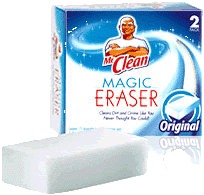
MAGIC. FUCKING. ERASERS. THEY WORK ON EVERYTHING JUST DON’T SCRUB HARD. I took the ring out of our bathtub with one. Also generic ones work just as well.
Keep some bleach around but if you use it for cleaning? Dillute it. There’s rarely ever a case where you need to pout straight bleach on anything. A cap full or two in a bucket of water works just fine.
DO NOT MIX CLEANERS. Chemical reactions are can be very dangerous. Here’s a good list. (Note that vinegar and baking soda can actually be a good combo for removing smells from things but it’s not very good at actually -cleaning-.)
If you drink? Don’t take meds at the same time it’s just not good.
Make sure you check the dosages on your pill bottles. No one wants to accidentally overdose on cough syrup or ibuprofen.
If you have a uterus make sure you have a heating pad and ibuprofen on hand for the pain. Hot baths also generally help and Ginger Tea is excellent for any nausea.
Buy a first aid kit. It’s worth it in the long run.
You can often do your taxes online at places like TurboTax.
Petroleum jelly (aka Vaseline) is good for chapped lips and you can get a decent sized tube or tub of it (generic brand version) for cheaper/same price as Chapstick.
KEEP TRIPLE ANTIBIOTIC OINTMENT IN YOUR HOUSE FOR CUTS AND SCRAPES AND SORES.
~~Medications~~
Over the counter medications (stuff you can buy right off the shelf no prescription needed) have a name brand and a generic name. ALWAYS buy generic if it’s available it is literally the same thing and way cheaper usually.
Some names to remember when you’re looking for meds!
Acetaminophen = Tylenol
Used to treat pain and reduce fever. Do not take with Ibuprofen.
Ibuprofen = Advil, Midol, Motrin
Used for pain and fever, is an anti-inflammtory. Is good for period cramps because it is an NSAID (non-steroidal anti-inflammatory drug).
Naproxen = Aleve, Naprosyn
Treats fever, pain, arthritis pain, gout, period cramps, tendinitis, headache, backache, and toothache. Is also an NSAID.
Acetaminophen + Asprin + Caffeine = Excedrin
Usually marketed as “Migraine Relief” as a generic.
Asprin = Bayer
Use for pain, fever, arthritis, and inflammation. Makes you bleed easily so should not be used for periods. Might reduce risk of heart attacks.
Triple Antibiotic Ointment = Neosporin
Used on cuts, sores, and scrapes to reduce risk of infection and promote healing.
Also a general mutli-vitamin isn’t a bad idea and if you don’t get a lot of fruits or milk/sunshine in your diet you might want to get vitamins C and D specifically for daily use.
Sales, coupons, and loyalty cards are your friends. Take full advantage of them.
Do your laundry as often as time and finances allow, and pay attention to those labels! Clothes will last longer if they are washed properly. Also, if you have sensitive skin, there are detergents for that. Nobody wants itchy clothes.
Own at least two pairs of comfortable shoes. One should be for walking or jogging, the other should be for nicer things like the office or going out to a nice restaurant. Your feet will thank you.
Those unmatched socks whose mates have fecked off to Paris or something can be reused as dusting sleeves. Pull it over your hand, spritz it with some Pledge or other dusting cleaner, and wipe down your furniture and surfaces.
It’s important to dust and vacuum regularly. It prevents the build-up of allergens, mold spores, leftover sick germs, bad smells, and general yuckiness. If you can thrift or secondhand a vacuum cleaner, DO IT. They can be expensive, especially if you’re on a budget.
If you have pets, clean up after them DAILY and make sure they always have access to fresh, clean water. Wash out their bowls at least once a week.
If your tap water smells like pool water or doesn’t taste right, don’t drink it. It may be palatable, but some areas may have chemicals or heavy metals in the water supply that can cause you lots of problems. Purchase gallons from the store if you need to, and don’t skimp on giving it to the pets.
Invest in a set of baking dishes and a decent set of tupperware. They’re fairly inexpensive (a set of Corningware runs about $40 USD) and you can always ask you folks for it for Christmas. Baking dishes greatly increase the number of things you can cook quickly and easily, and those storage containers will hold leftovers.
Invest in a durable set of pots and pans, a package of sponges, decent oven mitts, and a few potholders. You will want them.
Never leave wooden utensils in water. They will soften and warp. These need to be cleaned immediately after use.
Sticky pots and pans can be soaked to make scrubbing easier. You can also get a little scrubby brush to help take the crusty bits off. Just be careful that you don’t scrub off the nonstick coating, and NEVER use soap on a wok or a cast-iron frying pan.
Buy quart-sized freezer bags and use them to store single pounds of ground beef, pairs of chicken breasts, fish filets, frozen fruits and veggies…anything that needs freezing. You can save a lot of money on food that way. Just make sure that you press the air out of the bag before sealing it and write on the label what’s in the bag and the date you put it in the freezer.
You can “day-dot” with leftovers too, so you’re not wondering if that Chinese takeaway is still good when it’s on the point of gaining sentience and needed to be chucked three days ago.
On that note, takeaway food is good for about two days as leftovers, if you get it into proper containers and into the fridge right away. If you leave it sitting out all night, it’s no good.
If you’re going to reheat something in the microwave, put a paper towel over it to prevent splashing, especially if it’s something like chili or pasta.
A small slow-cooker can be a lifesaver. This is another good one to ask for as a housewarming or Christmas gift, but they only run about $20-$50 USD, depending on size. You can prep easy meals, stick them in quart or gallon-size freezer bags, then just dump them in the slow-cooker and turn it on Low while you’re at work. You come home and voila! Dinner is made.
Check allrecipes.com for easy meals you can make for very little money or with whatever you happen to have in the house.
Ice cube trays. Always have two and keep them filled in hot weather.
Put a pad of paper somewhere in your kitchen that you use as a grocery list. If you want to make a certain dish, write down the ingredients before you go to the store. If you run out of something, write it down for your next trip. Few things are more frustrating that getting home from a trip to the market and realizing you forgot something you really needed.
Buy toilet paper and paper towels in bulk whenever possible. Just do it. Trust me. And ALWAYS replace the roll the second it runs out, or you’ll regret it later.
Clean your bathroom at least as often as you clean your kitchen. There’s a similar amount of daily activity going on in there and just as much opportunity for grossness to happen. A simple spray cleaner, some disinfecting wipes, a few paper towels, and a Magic Eraser should get the job done. (Seriously, those things live up to their name!)
If you or a roommate get sick, clean EVERYTHING the second you get better. Use disinfecting wipes on things like sinks, doorknobs, and tabletops. Try to keep dirty tissues contained; plastic grocery bags are GREAT for this and you can just toss them when they’re full.
If your financial institution offers online banking, USE IT. Check your balance daily. You don’t have to know to a penny what’s in your account, but you should be aware of where your funds are, when your bills are due, and what you can afford to spend on groceries.
Here’s what you’ll need to know!
Learn all about the wonders of the human body and add scientifically-accurate drama to your stories.
MALNOURISHMENT
DEATH: average – 21 days (3 weeks), max ever recorded – 70 days (2.3 months)
6 HOURS: grouchiness and hunger due to lack of glucose.
24 HOURS – 48 HOURS: hunger very apparent; pains in stomach; body has entered ketosis and is using fatty acids as energy.
72 HOURS+: muscles begin to get broken down for energy.
You will become: increasingly depressed, irritable, hysteric apathetic; decline in concentration, comprehension and judgement; social isolation and withdrawal; possible self-harm.
If your character doesn’t eat for 5 consecutive days, they are at risk of Refeeding Syndrome. This is extremely dangerous and can be fatal.
Psychology of starvation based on the above experiment.
DEHYDRATION
DEATH: average 3 days; some live 8 – 10 days
for the calculations: TWV = total water volume in body; average adult loses 2.5 litres of water per day.
Assuming that your character does not eat, drink or absorb any moisture.
9 HOURS/2% TWV: thirst, discomfort, dry skin, loss of appetite; 50% loss of performance for athletes; elevated body temperature, rapid heartbeat, fatigue, dizziness when standing, decreased fluid secretion (sweat, urination, tears, etc).
24 HOURS/6% TWV: sleepiness, severe headaches, nausea, tingling in limbs.
DEATH: not known, but can stay awake for 11 days; max chronic sleep deprivation ever recorded (until death) – 6 months.
NOTE: This does not mean you can stay awake for 6 months. It means you can survive that long with chronic sleep deprivation – going days without sleep and then sleeping once or twice.
24 HOURS: mental ability impairment of someone who has blood-alcohol content of 0.10%; everything is worse – emotional control, memory, attention, decision-making, hand-eye coordination.
36 HOURS: hormonal spikes everywhere; losing time; lack of motivation; head buzzing like you’re dehydrated.
48 HOURS: microsleep, regardless of what you’re doing (you fall asleep for 1-30 seconds and then become disorientated);
72 HOURS+: say goodbye to higher mental processes like decision-making and planning. Also, say good bye to saying goodbye because even simple conversations are hard.
80 HOURS+: … and hello, hallucinations!
recommended reading:
this article of a soldier’s experience with sleep deprivation.
XNTP villains: thrive on chaos and making your life hell. Their Ne-Fe will read you like an open book, their Ti will analyze you, and the scary part is, they can revise their plans on the spur of the moment, as inspiration strikes, so nothing thwarts them since they have another six ideas to make your life miserable or society implode up their sleeve.
XNFP villains: pursue their own idealistic visions and personal desires at the cost of other people’s lives. Their Fi is warped to such an extent that it makes them only care about their personal gratification and sees others as expendable; while their Ne makes them creative, able to see multiple possibilities in any situation, and likely to be delusional. They are often motivated by their own personal pain and isolation, and take great joy in forcing you to experience similar suffering.
XSTP villains: will take you for everything you are worth. Their Se makes them thrill-seeking opportunists, their Fe makes them naturally able to both manipulate you on an emotional level and mimic genuine emotion, and their Ti makes them smart enough to avoid getting caught. Like the ENTP, they can revise their plans on the fly… but even scarier, they have Ni, which allows them to go in for a long-term evil plan with futuristic implications.
XSFP villains: are thrill-seeking sadists based entirely in the moment. Their Se makes them temper-tantrum throwing individuals driven to immediate gratification, while their evil Fi makes them immune to other people’s feelings and their Te makes them want to control, dominate, and inflict pain on other people.
XSTJ villains: are hardcore traditionalists who thrive on forcing others to surrender to their will and in establishing rules where none should exist. They will rigidly be faithful to outdated systems (religious, moralistic, cultural, or otherwise) while simultaneously repressing freedom of thought and crushing any new ideas beneath an iron shoe.
XSFJ villains: never get over anything, ever, and their mission in life is to hunt you down and make you pay for what you did to them (Si). Either that, or their mommy issues and upbringing will cause them to turn on you in a remote hotel to appease and placate what Mommy drilled into their head, even though she’s been rotting for decades (Si-Fe). But their Fe makes them so sweet that you’ll trust them until it’s too late.
XNTJ villains: have a plan for total domination that includes sacrificing a large number of innocent people along the way. They are insanely ingenious long-term strategists who can revise their plans if necessary, prone to recklessness and ruling through force by implanting their larger vision either into an existing system or creating a new system.
XNFJ villains: have a long-term strategy either for personal gain, revenge, or a warped sense of idealism that either includes emotionally tormenting you in order to destroy you, or manipulating you to join their cause to annihilate humanity for the greater good of… humanity. They will use their Fe to disarm you into trusting them, then knife you in the back and leave you for dead.
This is an ultimate masterlist of many resources that could be helpful for writers. I apologize in advance for any not working links. Check out the ultimate writing resource masterlist here (x) and my “novel” tag here (x).
as a former yearbook editor and designer, let me explain this further
if youre only planning on posting your art online, them please save it as .png ;this is also better for transparencies as well
BUT
please, if youre planning of printing your art, NEVER use png. it makes the quality of the image pretty shitty. use jpeg or pdf instead. and always set your work at 300dpi to get a better printing quality – this means, the images are crisper and sharper and theres no slight blurriness. i had a talk with my friend who is currently taking design, and pdf is much better to use when youre working with a bigger publishing company because it still has the layers intact, but if youre only planning on printing your stuff at staples or at some small publishing store, the jpeg is the way to go.
this has been a public service announcement
I’ve replied to this once before but I see it’s doing the rounds again.
This is all utter bullshit.
I’m sorry but if your qualification is working on the school yearbook, you have no qualifications. Do not pretend otherwise. As a former professional photo manipulator for advertising brochures, I can say that you’re not comparing apples to oranges here – if anything, you’re comparing fruit to farmyard machinery:
JPEG is a lossy format. It is suitable for web imagery because it sacrifices detail for reduced file sizes, but in doing so it introduces artifacts that weren’t in the original; if you load a JPEG for editing, then save it as a different JPEG, then you’re adding more artifacts formed from those first artifacts. Do this often enough and you end up with a horrid glitchy mess that looks like a puddle’s reflection after a stone’s been thrown in. You’ve seen those memes that have 3 or 4 different “found at” tags along the bottom, that look like fingerpainted copies of the original? That’s why.
PNG is a lossless format that comes in two primary flavours, PNG-8 and PNG-24, which use 8 and 24 bit colour respectively. 8-bit colour is what you have in GIFs, a limit of just 256 different colours in a predetermined palette, usually automatically chosen by your software when saving. These files will look the same as GIFs, potentially with large patches of solid colour instead of the usual gradual shading seen in 24-bit imagery. This is usually better for small banners or pixel art, as it can yield smaller filesizes than GIF format. (There is an animated version called MNG but it has very little web support, hence the continued use of GIFs.)
PNG-24 is great for larger images where detail is as important as colour depth, as well as printable RGB images and (if supported by the client) full colour images with gradient transparencies. It most certainly does not make “the quality of the image pretty shitty,” as it preserves every nuance. File sizes can be smaller than JPEG for small images, or significantly larger for large images.
PDF is a container file, whatever you put into it will be pretty much preserved as it was, so you gain nothing but lose nothing.
TIFF is what you need to be using for archival or print-quality imagery. It has support for multiple layers, multiple colour channels (RGB as well as CMYK, which is essential for accurate print rendering), and everything is preserved exactly as it was seen on-screen when being composed. There are compressed versions available, they use similar methods to PNG in order to maintain detail without sacrifice; next to whatever your graphics program uses natively, this is the most interchangeable format available for professional use.
DPI is important only when used in combination with image dimensions; in and of itself it serves no purpose. If you make a brilliantly detailed 640×480 image & set it to 300dpi, you’ll receive a brilliantly detailed 2 inch x 1.6 inch print. This is great if you want to make a postage stamp, but not if you’re creating an A4 flyer! Determine the image’s dimension then set the DPI accordingly; 72dpi isn’t hideous especially for text-heavy work (it’s ~3 pixels per millimeter), and 150dpi can be suitable for many images. Unless you’re interested in photo realism, 300dpi is usually overkill – for our hypothetical A4 flyer, you’d need a file of 2490×3510 pixels for edge to edge printing, with a correspondingly high memory requirement and filesize even if using a compressed format.
Keeping the layers intact is utterly unimportant for print work unless you want to use a separated colour print method that requires multiple passes to lay down each ink. If you send a file with all the layers, masks, etc. off for printing you’re liable to get it sent back unactioned, as they won’t want to take responsibility for choosing the wrong elements for printing. Save your work with everything intact, then save a flattened copy especially for printing purposes – this is one of the reasons Save Copy As… is a common option in graphics manipulation software.
This has been a Public Service Rebuttal.
FUCKING THANK YOU
As a designer who’s worked a few years for a newspaper, I cannot begin to tell you how much OP’s post made me cringe. I would have killed to get a photo as a TIFF for once instead of having to tear apart PDFs only to find a 50x100px 72dpi shitty JPEG inside for the 5 millionth time…
JPEG and PNG are best suited for web formats (and it is perfectly fine to save your web version as JPEG, that’s what it’s goddamn for). You will make a designer cry if you send a web-safe JPEG for print, however. And if you have a vectorized logo saved as EPS (or even better, AI), you will make that designer’s year.




 lav3nderwolftumblr
You must be logged in to post a comment.