As an apartment dweller, this is a game changer. My current apartment doesn’t have a laundry facility and the closest Laundromat about a 30 min bus ride which is just not practical. The mini-washer is a life saver
The panda mini washer hooks up to the sink, is incredibly lightweight (about 28 pounds, so light even I can lift it) and easy to use.
It has a surprisingly large capacity. The basket from the first picture represents about one and a half loads. The jeans took up a whole load while the rest filled the bin only half way.
Here’s the inside. The left is the washer the right is the spin dryer. Yes, it even drys.
Basically you shove your cloths into the washer, fill it up with water and let it go. I use my shower head to fill it up so it goes faster, the sink hook up took about five minutes to fill the whole tub, with the shower head is is down to a minute an a half. I do it in three wash cycles, a five minute rinse with baking soda, a five minute wash with soap and a three minute rinse with water. You have to drain and refill between each cycle so it’s a little more labor intensive than a traditional washer.
That’s the spin dryer. It’s about half the capacity of the washer so one wash takes about two loads to dry. The spinner is much more effective than I was expecting. A three minute spin gets my cloths about 90% dry. I hang them up to air dry for that last 10%.
The machine cost me about 150$. When you factor in two dollars for the bus, five for the machines (per week), the mini-washer pays for its self after only about six months worth of laundry.
I’m not great at expressing emotion, but I’m hoping you can tell how excited I am. Let me just say that the panda mini-washer is great and I highly recommend it to anyone currently using a Laundromat.
Read this and immediately bought it on Amazon for $180. I spend $15 a week to have my laundry done so this pays for itself in 3 months for me. THANK YOU JESUS.
OMG
@ all my nyc pendejas
Oh by the way, they have table top dishwashers that are pretty much the same thing:
This is one of the biggest technological breakthroughs for the everyday homeowner in the current decade: the realization that refrigerators aren’t the only things that can be miniaturized for better affordability and minimal space requirements.
Can you IMAGINE how this is going to change the lives of college students and apartment-dwellers? Or anyone with a lower income who can’t afford a place with “luxury” appliances like dishwashers and laundry machines?
A store-bought bag of topsoil, a roll of landscaping fabric, or a bag of cedar chips doesn’t go very far if you have a large garden or a very limited budget. Here are some ways to create the materials you need for a beautiful, organic, productive garden, by both re-directing household waste, and foraging in your local area. I use a lot of these tricks in my garden to make it almost completely free for me to continue growing new things, and expanding the workable area every year!
For soil
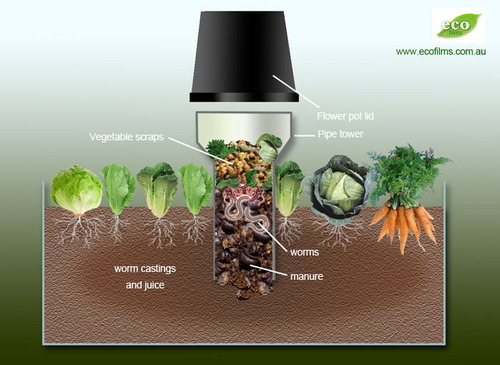
Save your food scraps to create a rich compost for growing veggies and amending your soil. There are numerous options for every size of dwelling and yard. Small space solutions such as Bokashi and vermicompost work indoors and don’t produce bad smells, so you can keep them underneath the sink.Worm towers, compost heaps, and outdoor compost binsare a great solution if you have more space. The more you add, the more rich, nutritious material you can make for your garden. I like composting because it means I don’t have gross smelly garbage bags to deal with, because food waste is diverted. It seems like a lot of work at first, but it actually saves time, money, and transportation.
There are three things that are essential for plant growth. These are nitrogen for leaves and vegetation (N), phosphorus for roots and shoots (P), and potassium for water movement, flowering, and fruiting (K). Commercial fertilisers will give the relative concentrations of each of these compounds with and “NPK” rating. Plants like tomatoes also need calcium to produce healthy fruit. You can create amendments for your garden and soil at home so that you do not have to purchase fertiliser.
Human urine contains 12% nitrogen, and it’s sterile. Dilute before adding directly to plants.
Legumes such as beans, clover, peanuts, and alfalfa fix inorganic nitrogen into the soil with mycorrhizal organisms and nodules on their root systems. Plant these crops every few years in rotation with others to renew the soil organically.
For phosphorus
Human urine is also a great source of phosphorous and trace amounts of potassium.
Many plants are particular about what the soil pH should be.
To make soil more acidic: add oak leaves, pine needles, leaf mulch, urine, coffee grounds or sphagnum.
To make soil more alkaline: add wood ash, shell, or bone.
Mulch
Mulch is decomposing organic matter that adds nutrition to the soil, while simultaneously keeping out weed growth and retaining moisture. It also attracts worms, fungi and other beneficial creatures to your soil. Free sources of mulch include:
Leaves
Garden waste
Grass clippings
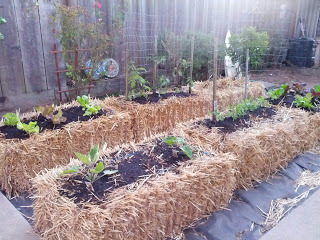
Straw (often straw bales are given away after being used for decoration in the fall. You can also plant vegetables directly in straw bales using a technique called straw bale gardening).
Wood chips (if you can borrow a wood chipper after you’ve collected some wood you can have attractive wood mulch for free)
When mulch isn’t enough to keep the weeds down, many people opt for landscaping fabric. It can be quite expensive and inorganic-looking. Free solutions that both attract worms and can be replaced in small segments as they break down include:
Newspaper*
Cardboard*
Egg cartons*
Printer paper, looseleaf, etc. in thick layers*
*try to make sure you are using paper that has vegetable-based dyes, so you aren’t leeching toxins into the soil.
Soil density/drainage
If your soil is compacted and you have plants that require low levels of water, or excellent drainage, add sand. I don’t recommend stealing it from the beach, but ask around and you’d be surprised at how easy it is to get for free. Sawdust also improves drainage. Adding organic matter and mulch encourages worms, who also till and aerate compacted soil.
If the area still needs drainage, dig a hole and fill it with bricks or rocks to create a “dry well”
For drainage in pots, add crushed bricks,terra cotta pot fragments, packing peanuts, small stones, marbles, orsand to the bottom under the soil layer. I find these in construction sites, on craigslist, or at flea markets.
Pots and growing containers
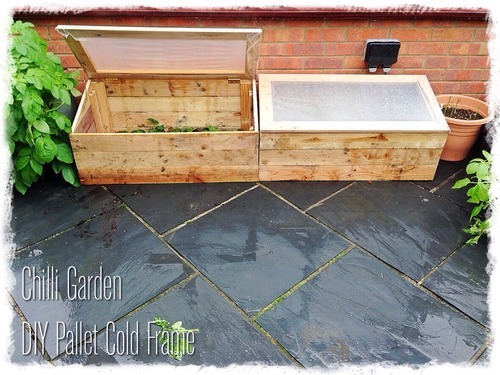
If you have space, raised beds are a great no-dig way to establish growing space. If you are pressed for space (like working on a balcony) there are many cheap or free options for container gardens.
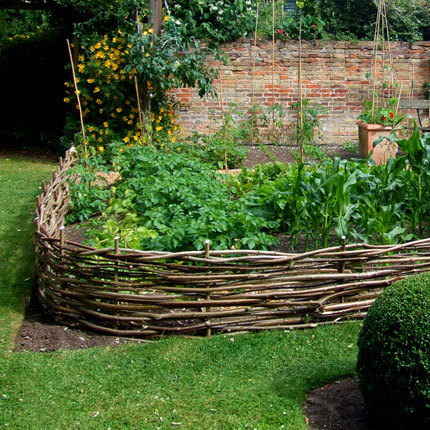
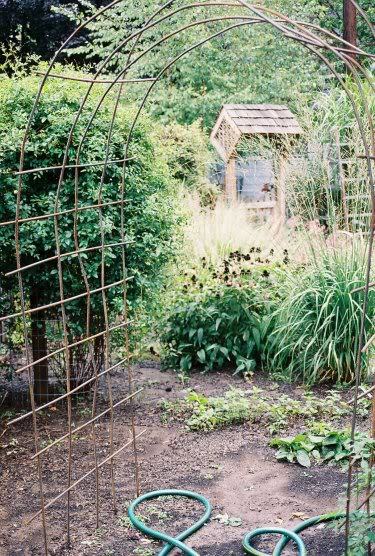
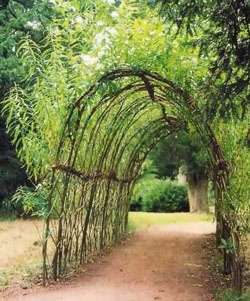
Creating raised beds allows you to build up the soil without digging. Free ways to do this include using rocks or lumber (like my DIY “lasagna garden” made with the sheet composting technique), using the “wattle“ method with sticks and posts you have found, using discarded straw bales, old bricks,paving stones,cinder blocks or really anything else you have lying around.
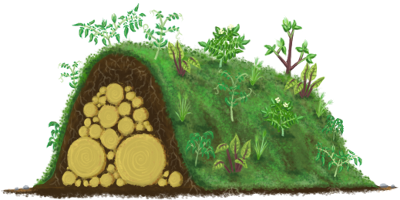
Hugelkutur raised beds, which fix carbon and provide drainage, can be made by stacking sticks and untreated wood, and then piling soil or compost over it. (Thanks milos-garden)
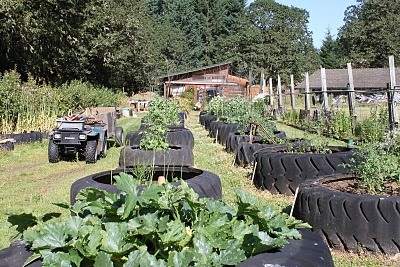
Rubber tire gardens retain heat in the night and allow for great drainage. They can also be painted in fun ways.
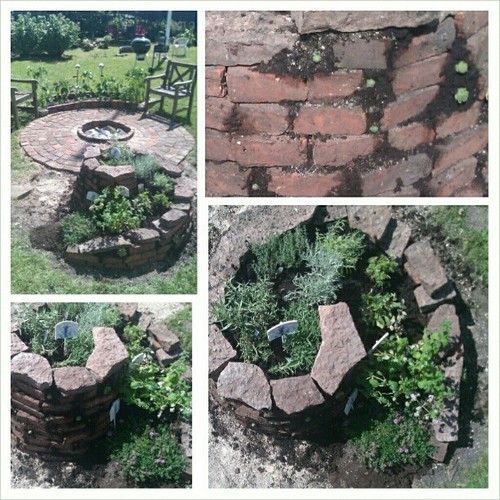
Herb spirals (here is mine: 1, 2, 3) can be built with stones, bricks, and other found materials.
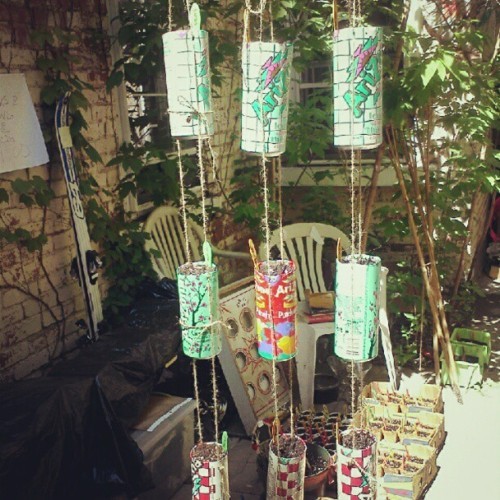
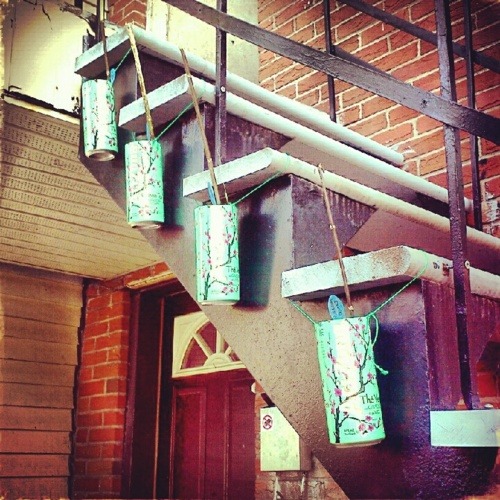
I often use old cooking pots, barbecues, teapots, or other found objects as planters.
If you can track down peat moss, cement, and vermiculite, you can make an easy Hypertufa planter in whatever shape you would like, provided you have a form in which it can dry.
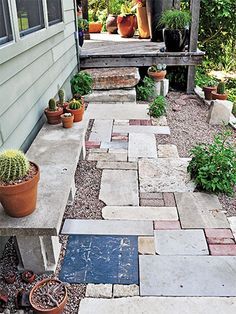
Paving often requires a foundation of sand or another stable and well-drained substrate, and a covering of stones, bricks, or other weatherproof elements. Slowly collect stones over time, or free paving stone fragments to create a mosaic-type walkway. Often people give these things away on craigslist. I made a patio and fireplace out of free salvaged bricks, for example.
Save seeds from foods you like from the grocery store: consider growing peanuts, ginger, garlic, peppers, or a walnut tree: all of these and more can be planted from store-bought produce.
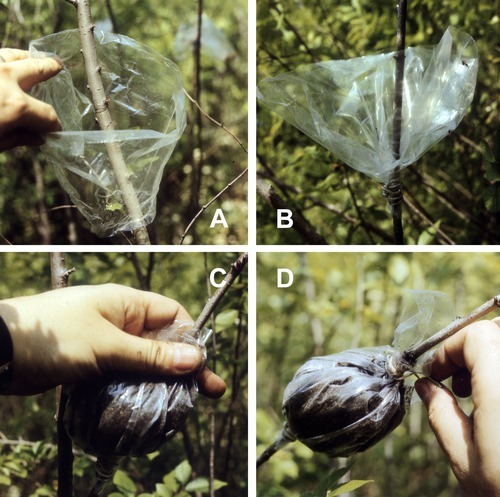
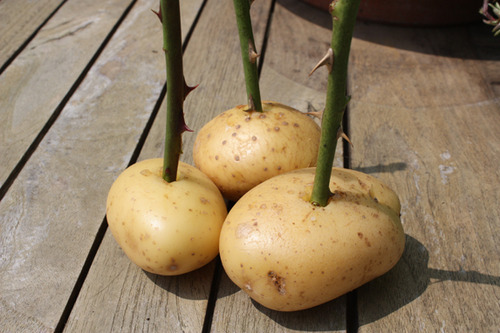
Learn to take cuttings. There is a tonne of info on the web about basic cutting propagation, layering, (like I do with rhododendrons) air layering, and numerous other techniques to take clones of plants you like. This saves going to a nursery and shelling out big bucks for all the variety you want.
For cuttings, willow tea and honey are great rooting hormones/antiseptics/anti-fungal agents, which can save you $40 if you were thinking of buying commercial rooting hormone.
I hope this helps you build your garden outside of the usual capitalist channels! It can be a cheap or free hobby if you are willing to think outside the box, and maybe put up with things that don’t look as clean or crisp as a hardware store catalogue.
If you have any further ideas, please add them! The more information the better.
Drainage for pots can also be achieved with styrofoam, pine cones, bark, twigs and branches, etc. We’ve used mostly sweetgum fruit in our last few pots and had good results with it!
P I S S O N Y O U R P L A N T S
but actually a lot of this is super sound advice and I want to try a lot of it
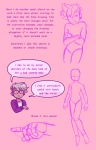
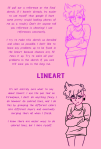
Like I said, I’m not good at explaining things, but I hope this helped at least a little bit! I didn’t really mention this in the tutorial, but my way of drawing is obviously stylized…most of the characters I draw have short torsos, long legs, hands and feet that are either too big or too small, and of course big heads, facial features and hair, if you want to try anything like that! I wasn’t entirely sure what to say, so if theres anything more specific you want to ask, go ahead and I’ll try to answer it !!
Farming systems need to fit into their natural and social environment. Sometimes we describe this as a socio-ecological niche.
Caption;
In a minute.
So, taking it that you said you live in
Arizona and “your family has a farm in Chihuahua,” A quick
congratulations are in order. You’re an absentee landowner! You’re
right at the peak of farming’s social pyramid. Living the dream.
So you probably don’t participate in
the day-to-day management, you just collect checks. Pretty common
situation for absentee landlords. From that distance, it’s
understandable that you have a poor grasp on water, land, and how
they play out in various types of agriculture.
But let’s take a step back.
Lots of cultures have used low or no
meat diets. The Ganges valley, ancient Egypt, China, much of early
Europe, ect.
Notice anything in common there?
They’re all very, very wet. Plants that
are edible for humans grow readily.
They also had intense hierarchies where
elites could just tell the lower classes they weren’t allowed to eat
meat-whether via religious teachings, custom, or just straight-up
economic exploitation to where animal protein was unattainable. But
that’s a whole different discussion.
On the other hand, lots of cultures
have used mostly or all animal diets.
E.G. The Bedouin, Mongols, Maasai,
Inuit, ect.
What do these have in common? They’re
in places that are either very dry or very cold. Either the plants
that grow are very sparse & tough, or none at all.
Humans can only digest specific types
of plant matter. We need tender stems, leaves & fruit; enlarged
seeds, or energy storing roots.
The entire rest of the plant is
inedible for us. Stalk, branch, dry leaves, ect.
And without intense irrigation, the only plants that grow in dry areas are entirely made of things
that humans can’t digest. They’re almost entirely cellulose. Tough
stalks, fibrous leaves covered in wax and hair, thorns, ect.
That’s why we call these areas ‘scrub’.
The only use humans can make of the natural vegetation is to scrub
pots.
But…cows, sheep, goats, horses,
bison, deer, camels & other ruminants can digest all of it.
That’s what those 3 and 4 chambered
stomachs are for. These animals GI tracts are fermentation chambers
full of microflora that break long, tough cellulose molecules down
into sugars and fatty acids that the cow can use.
We can’t do that. We eat straw, we just
poop out straw.
That’s why people living in deserts,
scrub & dry grasslands aren’t vegetarian. They’d starve. They
kept close to the animals that can digest what grows there;
ruminants.
(The oceanic food chain that Inuit &
other maritime peoples are looped into is a whole ‘nother
discussion.)
Failure to recognize the role of local
environment in diet is a major oversight in the vegetarian community
at large, so again, no personal blame here.
Traditional vegetarian societies are
trotted out to showcase that low/no meat diets are possible. But it’s
done w/o recognition as to why ‘those particular’ societies did it,
and others did not.
Paying attention to local environment
is a huge part of sustainability, and yet sustainability movements
don’t always do so well at that.
We can also fall short by failing to
recognize that for dry regions, the bottleneck in productivity isn’t
land, it’s water.
As an absentee landowner, you may or
may not be aware of how much irrigation water it takes to grow
vegetables in a desert. Math time.
Let’s start w. cows. Best figures for
cow carrying capacity in landscape similar to Chihuahua are for dry
part of CO. Double that for Chihuahua’s longer growing season, and 10
cows would need about 73 acres to live on (wild scrub w no
irrigation.)
Cool, so we don’t have to irrigate to
feed those cows. All we have to do is give them drinking water. How
much? A cow needs about 18.5 gal/day, so 10 of them for a year would
need about 67,000 gallons.
67,000 gallons is a decent amount of
water.
Now let’s look at how much it takes to
grow vegetables on that same land.
Most plant crops need about an
acre-inch of water per week.
For the non-farmers and absentee
landlords following along, an acre-inch is just how much water it
takes to cover an acre of land 1” deep.
It’s about 27,000 gallons.
An acre of crops needs that every
single week.
Chihuahua’s got this amazing long
growing season. So let’s say a veggie, grain, soybean or other plant
protein farm in Chihuahua’s got crops in the ground 40 weeks out of
the year.
73 acres x 40 weeks x 27,000
gallons/week = 79 MILLION gallons of water.
That’s a thousand times more water.
It takes a thousand times more water to
grow an acre of crops for human consumption, than it takes to grow an
acre of cow on wild range.
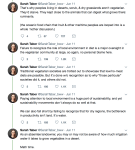
Again, as an absentee farm owner you
may or may not be aware already. But for audience at home, most of
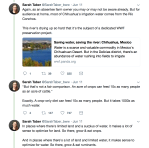
Chihuahua’s irrigation water comes from the Rio Conchos.
The river’s drying up so hard that it’s
the subject of a dedicated WWF preservation project.
“But that’s not a fair comparison. An
acre of crops can feed 10x as many people as an acre of cattle.”
Exactly. A crop-only diet can feed 10x
as many people. But it takes 1000x as much water.
In places where there’s limited land
and a surplus of water, it makes a lot of sense to optimize for land,
so there, grow & eat crops.
And in places where there’s a lot of
land and limited water, it makes sense to optimize for water, So
there, grow & eat ruminants.
It’s really interesting to me that the
conversation around vegetarianism & the environment is so
strongly centered on assumptions that every place in the world is on
the limited land/surplus plan.
You know what region that describes
really well? Northwestern Europe.
In many ways, viewing low/no meat diets
as the One True Sustainable Way is very much a vestige of
colonialism. It found a farmway that works really well in NW Europe,
assumed it must be universal, and tries to apply it to places where
it absolutely does not pencil out.
What a nice accessible description of a very important perspective! Now obviously not all of it can apply to every biome or social niche (a key problem with factory farming is the emphasis on forcibly terraforming land to suit the needs of cows – this is, among other things, lethal to the local ecology) but such a vividly painted picture of the nuance of food networks and the relationships between humans and our ecology. The reason I think it’s important to reblog it is that it begins to introduce people to that nuance, that concept of a complex ecology that we still belong to, in which current trends and moral judgments are …. barely a scratch on the surface, the equivalent of buying a different flavour of potato chips.
That’s basically it, the current discourse we have around food is at the level of what flavour of potato chips is Best For The World (And Grants Me The Most Imaginary Performance Points When I Purchase It) and we get people fighting over what colour packet they think everyone else should buy. But they’re all the same Walkers brand potato chips in the same bag, they just have different levels of artificial flavouring and slightly different colours on the front. We ought to raise each other up to the level of interrogating potato chips, asking why we are consuming a single brand, teaching each other to make our own, learning about different relationships other people can have with chips, seeking and supporting other brands, learning about other ways to use potatoes, pressuring the big producers to make better global choices. forcibly changing the fashion so that the disposable crinkly packets become passé and unmarketable, and everyone insists on having them packaged in sustainable recyclable paper. That’s the difference between the discourse we have and the discourse we could be having.
I would love to see us bringing this depth and nuance to all of our discussions about food.
What 16 trillion dollar debt? I have no idea how my free stuff is going to appear. I just know I want it.
He’s raising taxes on the rich
He’s planning on stealing more from people… ok that makes sense. Just because *They* are rich doesn’t mean those people deserve to have more of their wealth stolen from them.
Yes because the wealthy billionaires that steal and undervalue labor, and companies that scapegoat paying taxes are really hurting
why even bring up the national debt if you don’t want people to pay taxes
I’m on the phone half asleep, but yeah, Thank you for real
I don’t think OP understands what rich people are. Like they literally won’t even notice the taxes. It will make no impact on the wealthy at all. You could take literally 50% of the income of the top 10% and they would have to make zero changes to their lifestyle.
Money to them is just a high score. They whinge when you take them down a bit but it makes literally no difference because they’re still winning the fucking game.
They do actually 100% deserve to have their money taken. People are starving to death because we think disability payments shouldn’t be enough to live on and minimum wage should be half of what you need to survive so yeah, I think millionaires and billionaires deserve to have a tiny fucking fraction of the money they could never spend in a fucking lifetime so I can fucking EAT AT ALL.
I also don’t think people understand actually how much a billion dollars is. Like. it’s such an enormous number.
We think of numbers that big like a set of stairs, a hundred, a thousand, ten thousand, a hundred thousand, a million, ten million, a hundred million, a billion.
With each jump just being another step on the staircase and not realising HOW FUCKING HUGE each step is, and how vast the gap is between each of them.
Aside from the fact that even a million dollars is far more than you need, a billion is disgusting excess. There is no conceivable way one person could justify needing a billion dollars when you know HOW MUCH that is.
To put it in perspective: a million seconds is 11 and a half days a billion seconds is 31 years and 9 months.
Another example would be Warren Buffett: He made $US12.7 billion in 2013. That was his yearly income, not his total worth. Just his income for 2013.
That’s $37 million per day; $1.54 million per hour; $25,694 per minute
How much do you get per hour? Is it enough to live on? the minimum wage in america is $15,080per year That man makes more money per minute just for being alive, even in his sleep than most of you do in an entire year.
also, just using seconds for reference again
15,080 seconds is just over 4 hours. 12.7 billion seconds is 402 years and 4 months.
Can someone please make a staircase graph with dollar amounts?
I have discalcula and have a hard time conceptualizing numbers. I feel like that’s a great analogy and would help me.
Ok so I tried and the number differences broke the weird little graphing thing I was using.
so here we have one thousand (1,000) not showing one million (1,000,000) at one pixel
and one billlion (100,000,000) is the big pilon there.
I added fifty million in to show because that graph goes in increments of 50 million.
So how much is 50 million compared to a million though, it’s only one pixel?
so smol. But still we’re trying to get down to a thousand, (which is ten hundred-dollar-bills.)
So what does a million look like compared to a thousand?
oh. We broke it again. It will only go in 50 thousands. So we got to look at how big 50k is compared to our wad of hunjies.
ok.
This is why i like using the seconds instead of graphs… But I won’t give up here.
the reason it’s so so hard to process is because a BILLION is an enormous number. there comes a point with numbers where we can’t actually process them and its just like…a lot. And more than “a lot” is still “a lot”.
So we need visual representation. Lets use pennies (thanks megapenny)
Imagine a penny. Just one.
Ok, you get a thousand pennies a week, and you end up with 52 thousand in a year. If they were dollars that’s a nice paying wage.
with me?
now this is a thousand pennies.
this is 50 thousand pennies (1 square foot solid of pennies! COOOOL) It’s roughly how many pennies you would have in a year if you got a thousand pennies a week.
This is a million pennies
And this is a billion pennies
(Which is 5 schoolbuss sized blocks of solid pennies.)
that is so many.
.
The problem with numbers is that we see them written like this
1 100 1000 1000000 1000000000
And we kind of subconciously go “well… it’s only increasing a little at a time, like a staircase. When the progression is more like
And so on. which is not a staircase I want to climb because it starts off reasonable and then jumps to building size, then mountain size.
We ‘add a zero’ which is confusing because it’s timesing (x) not adding (+).
to make ten thousand dots, I would copy all the dots in my thousand pile, and paste them ten times. to make a hundred thousand, I would copy all the dots in my ten-thousand-dot pile and paste them ten times. thats what “times by ten” means.
That’s what adding a zero is, it’s multiplying (x) the last number we had by ten. (i also say timesing: as in copy and pasting it ten times) try it with a word document and see how many pages it takes to get you a billion dots, and how many it takes for 15 thousand (minimum wage anual)
hopefully this was at least somewhat useful.
Anyway, the point is that if we imagine them as dollar coins, and one square block is established as good enough to live by a year, there’s no reason one individual deserves 5 bus-worths.
Omg this is excellent! Thank you so much, that does really help! The pennies in particular
Check out this awesome visual representation of how messed up our society is, everyone!
I literally was about to google a visual representation of this and then THERE IT WAS IN THE POST
Seriously. It’s time for people to wake the fuck up. I’m sick of the godsdamned wilful blindness.
We had this conversation in my sociology class.
If you dont understand the wealth distribution in america, here you go
This is what OP and America thinks it is
What it actually is. Evaluate your life. Evaluate your income. This is why we need to take from the 1%
The 1% makes so much money its off the grid.
If you stack the 1% money next to eachother it would be like this
That 0% is your college students and people working fast food. Its below the poverty line. So taxing the 1% wont do shit to him.
This post got so incredibly awesome I’m almost glad OP posted it in the first place-almost
This is so helpful omg
I’ve written about a lot of these points separately, so it’s nice to see them together – especially with nice visualizations!
I have had this on my mind for days, someone please help:
Why are dogs dogs?
I mean, how do we see a pug and then a husky and understand that both are dogs? I’m pretty sure I’ve never seen a picture of a breed of dog I hadn’t seen before and wondered what animal it was.
Do you want the Big Answer or the Small Answers cos I have a feeling this is about to get Intense
Oooh okay are YOU gonna answer this, hang on I need to get some snacks and make sure the phone is off.
The short answer is “because they’re statistically unlikely to be anything else.”
The long question is “given the extreme diversity of morphology in dogs, with many subsets of ‘dogs’ bearing no visual resemblance to each other, how am I able to intuit that they belong to the ‘dog’ set just by looking?”
The reason that this is a Good Big Question is because we are broadly used to categorising Things as related based on resemblances. Then everyone realized about genes and evolution and so on, and so now we have Fun Facts like “elephants are ACTUALLY closely related to rock hyraxes!! Even though they look nothing alike!!”
These Fun Facts are appealing because they’re not intuitive. So why is dog-sorting intuitive?
Well, because if you eliminate all the other possibilities, most dogs are dogs.
To process Things – whether animals, words, situations or experiences – our brains categorise the most important things about them, and then compare these to our memory banks. If we’ve experienced the same thing before – whether first-hand or through a story – then we know what’s happening, and we proceed accordingly.
If the New Thing is completely New, then the brain pings up a bunch of question marks, shunts into a different track, counts up all the Similar Traits, and assigns it a provisional category based on its similarity to other Things. We then experience the Thing, exploring it further, and gaining new knowledge. Our brain then categorises the New Thing based on the knowledge and traits. That is how humans experience the universe. We do our best, and we generally do it well.
This is the basis of stereotyping. It underlies some of our worst behaviours (racism), some of our most challenging problems (trauma), helps us survive (stories) and sharing the ability with things that don’t have it leads to some of our most whimsical creations (artificial intelligence.)
In fact, one reason that humans are so wonderfully successful is that we can effectively gain knowledge from experiences without having experienced them personally! You don’t have to eat all the berries to find the poisonous ones. You can just remember stories and descriptions of berries, and compare those to the ones you’ve just discovered. You can benefit from memories that aren’t your own!
On the other hand, if you had a terribly traumatic experience involving, say, an eagle, then your brain will try to protect you in every way possible from a similar experience. If you collect too many traumatic experiences with eagles, then your brain will not enjoy eagle-shaped New Things. In fact, if New Things match up to too many eagle-like categories, such as
* pointy * Specific!! Squawking noise!! * The hot Glare of the Yellow Eye * Patriotism?!? * CLAWS VERY BAD VERY BAD
Then the brain may shunt the train of thought back into trauma, and the person will actually experience the New Thing as trauma. Even if the New Thing was something apparently unrelated, like being generally pointy, or having a hot glare. (This is an overly simplistic explanation of how triggers work, but it’s the one most accessible to people.)
So the answer rests in how we categorise dogs, and what “dog” means to humans. Human brains associate dogs with universal categories, such as
* four legs * Meat Eater * Soft friend * Doggo-ness???? * Walkies * An Snout, * BORK BORK
Anything we have previously experienced and learned as A Dog gets added to the memory bank. Sometimes it brings new categories along with it. So a lifetime’s experience results in excellent dog-intuition.
And anything we experience with, say, a 90% match is officially a Dog.
Brains are super-good at eliminating things, too. So while the concept of physical doggo-ness is pretty nebulous, and has to include greyhounds and Pekingese and mastiffs, we know that even if an animal LOOKS like a bear, if the other categories don’t match up in context (bears are not usually soft friends, they don’t Bork Bork, they don’t have long tails to wag) then it is statistically more likely to be a Doggo. If it occupies a dog-shaped space then it is usually a dog.
So if you see someone dragging a fluffy whatnot along on a string, you will go,
* Mop?? (Unlikely – seems to be self-propelled.) * Alien? (Unlikely – no real alien ever experienced.) * Threat? (Vastly unlikely in context.) * Rabbit? (No. Rabbits hop, and this appears to scurry.) (Brains are very keen on categorising movement patterns. This is why lurching zombies and bad CGI are so uncomfortable to experience, brains just go “INCORRECT!! That is WRONG!” Without consciously knowing why. Anyway, very few animals move like domestic dogs!) * Very fluffy cat? (Maybe – but not quite. Shares many characteristics, though!) * Eldritch horror? (No, it is obviously a soft friend of unknown type) * Robotic toy? (Unlikely – too complex and convincing.) * alert: amusing animal detected!!! This is a good animal!! This is pleasing!! It may be appropriate to laugh at this animal, because we have just realized that it is probably a … * DOG!!!! Soft friend, alive, walks on leash. It had a low doggo-ness quotient! and a confusing Snout, but it is NOT those other Known Things, and it occupies a dog-shaped space! * Hahahaha!!! It is extra funny and appealing, because it made us guess!!!! We love playing that game. * Best doggo. * PING! NEW CATEGORIES ADDED TO “Doggo” set: mopness, floof, confusing Snout.
And that’s why most dogs are dogs. You’re so good at identifying dog-shaped spaces that they can’t be anything else!
Technically the cognitive process of quantifying Doggo-ness is called a schema. But I wrote it a while ago, on mobile, at about 4 am, while nursing a newborn baby with the other arm, and I’m frankly astonished that I was able to continue a single train of thought for that long, let alone remembering Actual Names For Things (That Have Names.) I strongly encourage you to learn more about schemata if you are interested in this sort of thing!
hey, thanks so much! this might get a lil long (as it always does!!) so bear with me.
firstly i want to say, there’s no right or wrong way to pick colors. every artist has their own palette they prefer and i think it’s super delightful to spend time developing your own special sense of color. so even though i’m explaining things in a “this is how you do it” sort of way, it’s not the only way! just my way. the best method to develop your own sense of color is to look at a LOT of art, look at a LOT of the world around you, and practice practice pratice.
at this point in my life i pick colors intuitively just because i think it’s something i’m naturally tuned into, and i’ve been doing it for a few years, so i don’t actively plan my palettes. but here are some things that i think about as i pick colors.
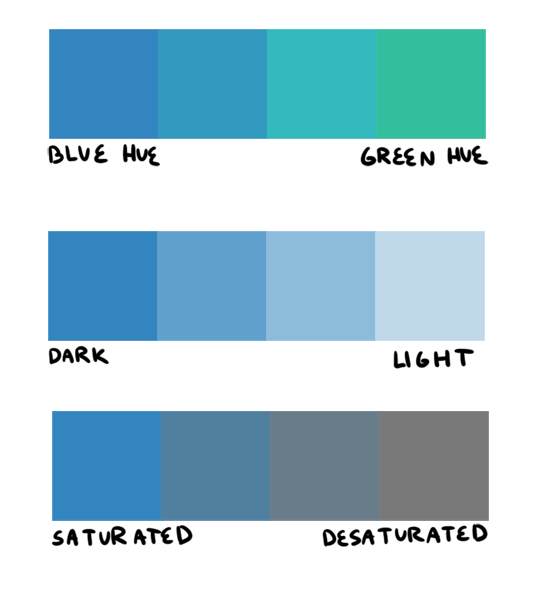
firstly, i want to go over hue, value, and saturation. i’m sure everyone knows these intuitively but i want to explain them in words. hue, value and saturation are what make up a color, and decide how colors differ from each other.
hue: what color the color actually is. red, purple, green, yellow, and everything in between.
value: how light or dark a color is. if you’re painting traditionally, adding more white or more black to a color lowers or raises its value.
saturation: how “pure” the color is vs how much neutral tone is in it.
here’s an example of all three:
this comes into play because a big mistake i see beginners make is that they pick a “just” color, and by that i mean they pick “just blue” or “just yellow”. imagine buying a set of oil paints and only using paints straight from the tube without ever mixing. it would be impossible! so i try to avoid picking “just” colors, except as for a complementary color (more on that in a bit). here are some variations of a red, for example.
so, the biggest thing for me when i pick colors is that i want them all to be friends. i want them all to have something in common so that they get along. i usually lose control of a painting when my colors feel to different from one another. so, i will usually start a painting with one color i know for sure i want, and “subordinate” other colors to it, meaning every other color i pick has to look good with that color. as to how you figure out what looks good and what doesn’t, that just takes time and lots of observation to build a personal opinion 🙂 here’s an example from one of my paintings. in this case, the main color is the trees.
and here’s another from rick & morty, the main color is the sky this time.
now that that’s out of the way, i’m going to give you the Actual Cheat Sheet for color palettes. in color theory, there are 8 basic color schemes that are generally pleasing to look at. here they are.
i usually use an analogous palette or monochrome palette out of preference. the two examples above more or less fall into those categories. however, i also like to use split complementary because the complimentary color adds a LOT of contrast and visual interest. it’s great to use if you have a specific thing in a painting you want to draw attention to. here’s an example:
it doesn’t always have to be a perfect split complementary, just one color that differs from the “family” of colors that take up a majority of the piece.
now! you might be wondering when’s the right time to subordinate a color, or where to put it, or how much of it to use, etc. and the answer is: CONTRAST. there is always visual interest in things that are different. i was rifling through my school notes and found these great types of contrast when working with color.
value: things that are light vs things that are dark.
hue: two colors that look different. I.E. yellow vs blue.
saturation: things that are saturated vs things that are desaturated.
proportion: note the example above. a majority of the painting is orange, so the green stands out because there is proportionally less of it.
temperature: things that are warm vs things that are cool.
complementary: red vs green, blue vs orange, yellow vs purple. when in doubt, these colors always contrast against each other because they have nothing in common (there is no red in green, etc).
simultaneous: this is a little advanced and i’m bad at explaining it, so please read up on it here.
a super helpful exercise is to look at your favorite illustrations, paintings, photographs, designs, etc and assess which one of the 8 color schemes (linked above) it has, and which types (can be more than one) of contrast it has. we did this in school and it REALLY helped me look at color better. here’s part of the assignment i did, the artist is annette marnat.
so! that’s pretty much how i think about color and how i pick my colors! i hope it was somewhat helpful! there’s so so so so much about color theory i can’t even begin to cover, i highly urge you to watch some videos and read some books and articles to further your study. a great starting place would be this series of videos. these are made by my teacher Richard Keyes, i think he had a dvd or something. everything i’ve talked about so far i learned from him and he is an absolute expert in color. these videos are invaluable. if you take anything away from this post, let it be to watch these videos hahaha.
to answer your question about my color leads, every painting was a collaborative effort between the three of us, and sometimes other painters too. it was a very hands-on crew, so i can’t say any of the r&m bgs i did are 100% “mine”. however, i think my personal color sense is waaaay different than jason or phil’s, which made the process very interesting because we usually had 3 very different opinions hahaa. you can check out their work here and here to see what things they brought to the table in relation to my own contributions.
thank you for the ask! again, i hope this was helpful 🙂
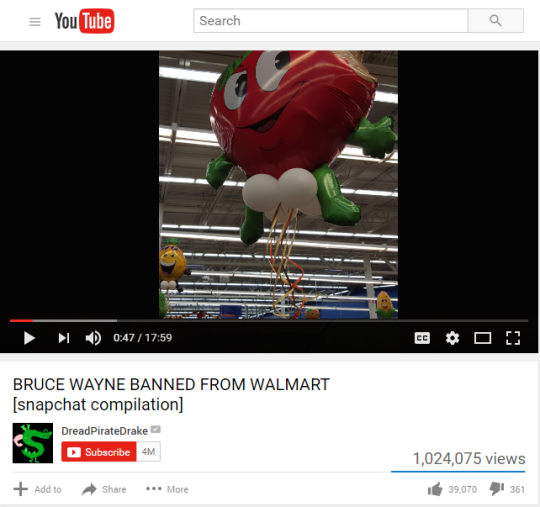
tim drake’s snapchat is 90% him making bruce wayne do normal middle-class american things and filming the results. popular youtube compilations include the one where they’re at denny’s at two in the morning and tim keeps trying to get bruce to order a moon over my hammy just so he’ll have to say it, the one where they’re at disneyworld and bruce gets increasingly frazzled culminating in him actually physically picking up gaston for reasons no one can entirely recall, and everyone’s favorite series “bruce wayne doesn’t understand walmart”
having thought about it the best part is probably when a pranking fails because bruce has such a bizarre patchwork of knowledge/skills and it does not occur to him to hide most of it. tim puts a ghost pepper in bruce’s food but bruce just eats it like nothing is wrong. the same thing happens with the chocolate-covered crickets. it turns out bruce can lick his own elbow. bruce can lasso a runaway robot lawnmower like it’s a calf at a rodeo. whenever tim expresses shock that bruce knows how to do something he says “i did go to college, tim” as if that explains anything and it becomes a meme. whenever anyone does something fucking absurd it just gets tagged “i did go to college, tim”.
The camera came uncomfortably close to the face of a man ignoring it. He was very good at it. He was reading a book about, of all things, the history of denim. It was not the sort of book that made it easy to ignore cameras, but he remained stoic.
The caption said helpfully: [been doing this for 30 mins]
“Bruce. Bruce. Bruce. We need to go Walmart. Bruce. I need it.”
“Ask Alfred.”
→→→
“It’s a surprise for Alfred.”
“You can’t surprise Alfred.”
“Bruce, please.”
→→→
“It’s not a matter of permission, I’m saying you literally can’t surprise Alfred.”
→→→
[he hates when i say that]
“Bruuuuce.”
“No.”
“This is bullroar.”
Bruce finally set down his book with an expression of the most profound disgust.
→→→
[oh no now we’ll be here all day]
“—either curse or don’t, just commit one way or the other instead of—”
→→→
The camera took its time panning over a black BMW.
“Can I drive?”
“No.”
→→→
[after this he took away my music privileges]
Bruce was driving, looking stoic again. His face lent itself well to stoicism. The radio played, at high volume, “Sandstorm” by Darude.
→→→
“I’ll play something different this time.”
“You had your chance and you blew it on a meme.”
→→→
[SJGJDH;FUKC 😂😂😂]
“I’m boooored.”
“Hi, bored,” Bruce said, eyes still on the road, and Tim groaned loudly. “I don’t give a shit.”
The view shifted and audio clattered as Tim dropped the phone, barking a laugh.
→→→
The phone was wobbly as Tim followed Bruce into the store. “Can I get a trampoline?” he asked, camera pointed to one outside the store.
“We have three trampolines.”
“But I want that one.”
→→→
They were in the chip aisle. “Have you ever had a Dorito? One Dorito? In your whole life?”
“I am a person. I eat food for people.”
→→→
The camera followed a bag of Nacho Cheese Doritos into the cart.
“We’re not getting those.”
“We need to get sour cream, too.”
“No.”
“You’ll love it.”
“No.”
→→→
Tim had put the seatbelt of the cart’s seat, intended for toddlers, around a giant plastic jar of orange cheese puffs.
“I thought you were getting something for Alfred.”
“I’m getting groceries while we’re here.”
“None of this is food.”
→→→
[$3 pickles blowing his mind rn]
Bruce was holding a gallon jar of pickles with an expression of incredulity.
“—costs extra to not waste food?”
“It’s Walmart.”
“Even taking into account the economies of scale—”
→→→
[putting his degree to use in the pickle aisle]
“—it just makes no sense even as a loss leader, unless the goal is to drive the competition out of business and hope they don’t go bankrupt in the—”
→→→
[i think he’s buying a pickle company??]
Bruce had every appearance of furiously texting on his phone, or possibly composing emails.
→→→
[lmao he did]
Bruce was now on his phone, looking impassive as ever as he contemplated the giant jar of pickles.
“—the business itself is perfectly sound. Yes. Obviously. Dead serious. Look, if you—”
→→→
Tim put a gallon jug of ranch dressing into the cart.
“Absolutely not.”
→→→
Tim was in the frozen section, his reflection visible in the glass.
“I bet Alfred would love some pizza rolls.”
“Your lies demean us both, Tim.”
→→→
Bruce was standing in the toy aisle, rubbing the bridge of his nose. “I understand the concept of blind boxes perfectly well, thank you.”
“Then why are you acting confused?”
“Why does Thomas the Tank Engine—”
→→→
[🌈🌈🌈]
Bruce was making a face of disgruntled bafflement at a display of baby clothes.
“—disturbed by the amount of aggressive heterosexuality being foisted on these babies.”
“Yeah,” Tim agreed. “What about the gay babies?”
“I can’t tell if you’re joking but I’m unironically concerned.”
→→→
[gotham pride]
The camera panned over a display of hero-themed hats. Most of the Batman hats had sold out, while the Superman display was nearly full. It panned back to Bruce, who was taking a picture with his own phone.
“Who you texting it to?”
“Friend in Metropolis.”
“Metropolis sucks.”
“Yes. Yes it does.”
→→→
[no escape]
The camera peered out slowly from behind a clothing display. Bruce was surrounded by enthusiastic and friendly women. It was impossible to tell what they were talking about.
→→→
[???]
Bruce was holding a dress up against himself. The women around him seemed delighted and were nodding their approval.
→→→
[i’ll strike while he’s distracted]
Tim dropped another two four-movie collections of Shrek on top of the considerable pile he’d already amassed. He panned up to check that Bruce had not caught him before grabbing another.
→→→
[busted]
While Bruce put DVDs back on the shelf, Tim surreptitiously grabbed a Shrek coloring book.
→→→
[he’s gonna get a fish]
Bruce was frowning at the wall of fishtanks in silence. Finally he said, “These fish are very unhealthy.”
→→→
[HE’S BUYING ALL THE FISH]
The man attempting to help Bruce looked baffled. Bruce gestured to the entire display of fish with a nod. The man shook his head. Tim brought his phone close to a betta, blue and red with a tattered and graying tail.
“We’re here to save you,” Tim stage-whispered to it.
→→→
Bruce was now engrossed in conversation with multiple employees.
“—if I bought some tanks — they’re much too small but as a temporary measure — we could transfer them directly and it might be less distressing for the fish.”
“Maybe I could get one of the big dolly carts from the back?” one young man suggested.
→→→
The low camera angle suggested Tim was trying to be surreptitious.
“—for trying to unionize is completely against the law,” Bruce was saying, his voice low. He was helping three other employees transfer fish into large plastic tanks.
“At-will employment,” one woman said.
“We’d have to prove that was why they fired us,” someone clarified. “Otherwise they can say it was for no reason.”
“You’re shitting me.”
→→→
“—fucking with my hours hoping I’ll quit.”
“What? Why?”
“If they fired me, they’d have to pay unemployment.”
“That’s why they won’t let me work full-time.”
“What the fuck.”
→→→
[omg he’s stealing the employees now]
“—in Gotham, but there’s more opportunities outside of manufacturing if you’re willing to move.”
“Wait, so do you mean like for management?”
“No, no, that’s the starting wage for someone working assembly, quality control, that kind of thing. We’re all unionized, none of this at-will bullshit.”
“So if I—”
→→→
The woman from earlier was showing Bruce her phone while the others continued moving fish.
“You painted this?” Bruce asked. She nodded. “That’s fantastic. Are you showing it anywhere? I know a guy with a gallery — actually I know pretty much everyone with an art gallery in Gotham. I think I have a friend who’d really love this, if you don’t mind me making some calls for you.”
→→→
Four more employees had joined the menagerie.
“—almost always hiring in Gotham. People are always moving to cities with fewer evil clowns.” Everyone laughed. Tim snorted. “Employee insurance totally covers acts of supervillainy, though.”
→→→
[trying to crush the revolution]
The employees had not dispersed. In the distance, someone managerial was talking to Bruce. He looked much less amused than Bruce did.
→→→
[THEY CALLED THE COPS]
Tim had switched to the selfie camera, his face pure glee. He turned bodily to show the employees wheeling out tanks of fish out of the store, police lights in the parking lot.
“The manager tried to make Bruce leave but he insisted on paying for his fish and he wouldn’t stop giving people better jobs so the guy said it was corporate espionage and threatened to call the cops and Bruce called his bluff so he did it.”
→→→
[WE’RE BANNED FROM WALMART FOREVER]
Bruce was laughing with the police officers about something. The manager from earlier had been joined by men in suits. None of them looked happy. Some of the employees from earlier were yelling and flipping them off. One man pulled off the shirt of his uniform and started setting it on fire.
→→→
Bruce was on the phone in the parking lot.
“They’re small, most of them are tropical. You can figure out what they are when you get here. How is that racist? I’m not suggesting you already know them, I’m well aware you don’t personally know every single fish—”
→→→
“Either you take these fish or I toss them in the sewer and Killer Croc can eat them. It will be a merciful death compared to what they were getting. It doesn’t matter where I found them.”
→→→
[i’m not allowed near toxic waste]
Tim held the betta from earlier in front of his phone, bringing it dangerously close to Bruce’s face. Bruce had hung up, but seemed to be dialing another number.
“I’m keeping this one,” Tim said.
“Fine.”
“If I drop him in toxic waste do you think he’ll get powers?”
“We’ve already had this discussion.”
→→→
[the pettiest man in gotham]
Bruce was on the phone again, looking out at the empty field beside the Walmart parking lot.
“Yeah, just buy the whole thing. Yeah. Absolutely sure. Green Market’s doing good, we’ll build another one of those. Can we put up a billboard while it’s under construction? A really big billboard.”
→→→
“First of all, if it’s in writing, it’s libel. Second, figures taken directly from their report to shareholders aren’t defamatory. What’s the most they could even sue me for? See, that’s nothing. Bad PR for them, good for us, it’s—”
→→→
Tim had switched to the selfie camera again, and was using a sparkling purple filter that made his eyes look huge. He backed into Bruce so that Bruce’s face would be in the shot. “Bruce, look! You’re a pretty pretty princess!”
Bruce raised an eyebrow as he looked at his face on the screen. “I’m always a pretty princess,” he said seriously.
→→→
[he picked the music this time]
Bruce was driving again. He was listening to 100 Little Curses without any apparent irony. This did not mean there wasn’t any irony.
→→→
[i named him wally]
The Walmart betta was now in a tank that held at least a hundred gallons. His underwater castle was resplendent. His tail had grown in, a shimmering gradient of red and blue. Bruce could be seen in the background through the tank, sitting on the couch and reading a book.





























 lav3nderwolftumblr
You must be logged in to post a comment.