as a former yearbook editor and designer, let me explain this further
if youre only planning on posting your art online, them please save it as .png ;this is also better for transparencies as well
BUT
please, if youre planning of printing your art, NEVER use png. it makes the quality of the image pretty shitty. use jpeg or pdf instead. and always set your work at 300dpi to get a better printing quality – this means, the images are crisper and sharper and theres no slight blurriness. i had a talk with my friend who is currently taking design, and pdf is much better to use when youre working with a bigger publishing company because it still has the layers intact, but if youre only planning on printing your stuff at staples or at some small publishing store, the jpeg is the way to go.
I couldn’t even include all of the reference boards this blog contains on this photoset. That’s right! There’s EVEN MORE! There are pages and pages of them! It is an inspiration treasure trove! Bookmark this link! Fill your life with inspiration!
*heavy breathing for 40 hours*
For real if you don’t have this bookmarked then do it immediately. Incredible resource FOR FREE
This is part of my webcomic Postcards in Braille, which you can read on ComicFury or Tapastic. Updates on Mondays!
This comic/guide works well enough on its own, so I thought it’d be nice to post it here as well 😀 Braille is really cool and you don’t need to be blind or visually impaired to learn it – and spreading the use of Braille can help us build a more inclusive society! everyone wins!
Bonus fun fact: Braille is originally based on Night writing (or sonography), a tactile reading/writing system created for soldiers to communicate silently at night. Louis Braille adapted it into easier to read cells, creating the Braille system. Good to know it evolved into something so useful!
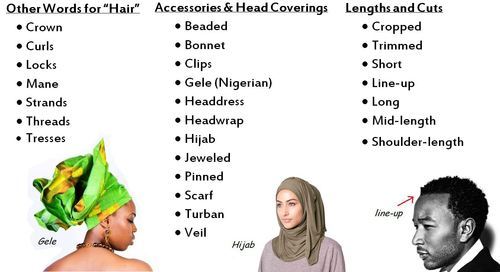
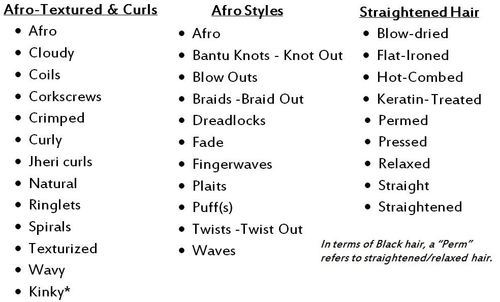
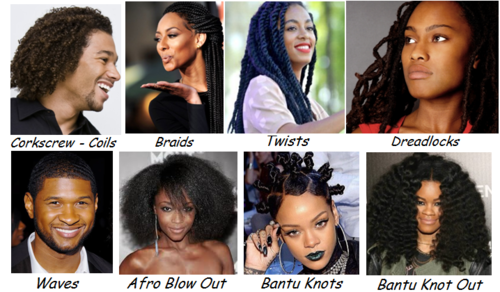
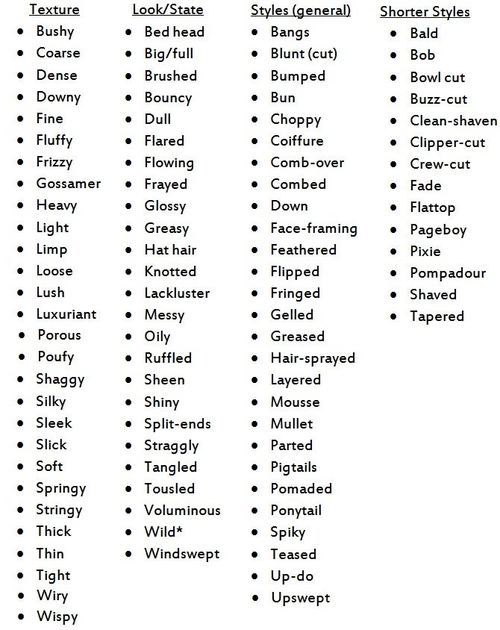
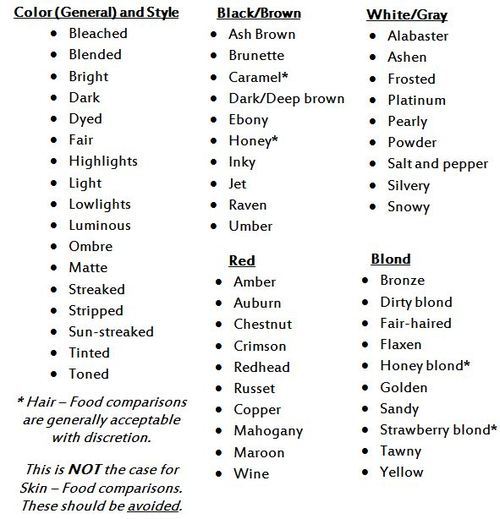
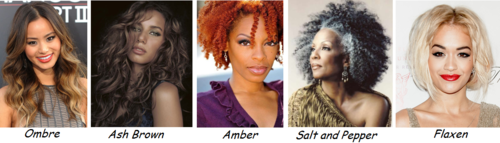
This began as a guide to describing Afro/curly hair but of course, I got carried away. From look and texture of hair, colors and various styles, this guide serves as a thesaurus of sorts for hair, as well as pointers for use in your writing.
This began as a guide to describing Afro/curly hair but of course, I got carried away. From look and texture of hair, colors and various styles, this guide serves as a thesaurus of sorts for hair, as well as pointers for use in your writing.
Culturally Significant Hair Coverings:
Know the meaning behind head wear and why it’s worn, when and by whom, such as a Native Nation’s headdress, before bestowing a character with it.
Appropriative Hairstyles: Keep in mind that Afro styles should be kept to those in the African Diaspora, such as dreadlocks, cornrows + certain and many braided styles.
Tread carefully describing Afro hair as “wild” “unkempt” “untamed” or any words implying it’s unclean or requires controlling.
“Nappy” and “wooly” are generally words to stay away from, the first having heavy negative connotations for many and the latter, though used in the Holy Bible, is generally not acceptable anymore and comes off as dehumanizing due to Animal connotations.
There are mixed feelings on calling Black hair “kinky.” I’m personally not opposed to the word initself and usage depends on the person’s race (I’m more comfortable with a Black person using it vs. a Non-Black person) as well as their tone and context (if it’s used in a neutral or positive tone vs. negatively/with disdain). Get feedback on your usage, or simply forgo it.
Combination Words: Try combing words to illustrate look of hair. A character with springy coils that dance across her shoulders with every movement, the man with thick silvery hair slicked back into a ponytail…
Mind Perspective: Depending on POV, a character might not know exactly what cornrows or a coiffure style is, at least in name, and it might make more sense if they described the hairdo instead. More defining terms might come from a more knowing source or the wearer themselves. One book I read described a girl’s afro puff as “thick hair pulled up into a cute, curly, poufy thing on top of her head and tied with a yellow ribbon.”
POC & Hair Colors: People of Color’s hair comes in all shades and textures. There are Black people with naturally blond and loosely-textured to straight hair, East Asian people with red hair, and so on. Keep that in mind when coding characters if you tend to rely on hair color alone to denote a character is white vs. a Person of Color.
Related Tropes: There are tropes and discussion related to People of Color, colored hair, and light-colored hair and features.

 lav3nderwolftumblr
You must be logged in to post a comment.